Cushion Natural Diamonds
What defines a cushion natural diamond?
A cushion natural diamond is characterised by its rounded corners and pillow-like outline, a silhouette that traces its lineage directly to the old mine cut popular in the eighteenth and nineteenth centuries. Unlike the sharp corners of a princess cut or the pointed ends of a marquise, the cushion's soft geometry distributes light in broad, open flashes rather than the needle-fine scintillation of a round brilliant. Natural cushion diamonds are cut from rough that has been extracted from kimberlite or alluvial deposits — the same geological origin as all natural diamonds — meaning the colour and clarity characteristics are entirely determined by the conditions in which the crystal formed over billions of years underground. Two sub-types exist: the 'cushion brilliant', which has extra facets below the girdle for higher brilliance, and the 'cushion modified brilliant', which produces chunkier, more open flashes of light sometimes called a 'crushed ice' pattern. Both are widely available in natural form and offer distinctly different visual characters despite sharing the same outline shape.
How to choose the right cushion natural diamond: cut, colour and clarity
Selecting a cushion natural diamond well requires particular attention to the length-to-width ratio and the cut sub-type, because cushion diamonds are not subject to the same standardised cut grades that round brilliants receive from GIA. A length-to-width ratio of 1.00 to 1.05 produces a near-square cushion; ratios of 1.15 to 1.25 yield a more elongated, rectangular outline that can create the visual impression of a larger stone and may flatter a narrower finger profile. For colour, cushion natural diamonds retain warmth more visibly than round brilliants, so stones in the G-to-I range on the GIA scale often appear near-colourless once set, making them a considered choice for those balancing colour against carat weight. On clarity, the cushion's larger facets and open crown mean inclusions can sit more visibly than in a tightly faceted brilliant, so SI1 or VS2 clarity grades warrant careful review of the grading report before purchase. Every cushion natural diamond here is certified by GIA, HRD or IGI, giving a verified baseline for all four quality characteristics.
What does a cushion natural diamond cost in the UK?
Cushion natural diamonds are generally priced below round brilliants of equivalent carat weight, colour and clarity, because the cutting process retains more of the original rough and the shape commands less of a premium in the market. The precise cost of any individual cushion natural diamond is driven by the interplay of carat weight, colour grade, clarity grade, and which sub-type of cut has been applied — a cushion brilliant with strong light return will typically be priced above a cushion modified brilliant in the same weight range. For context, Bridebook's 2026 UK average engagement ring spend of £2,247 covers the full ring including setting, meaning the loose stone budget will vary considerably depending on how much of that figure is allocated to the mount. Purchasing a cushion natural diamond loose allows the stone budget and the setting budget to be considered separately, which many buyers find gives greater control over the overall specification.
How is a cushion natural diamond certified and sourced?
Every cushion natural diamond in this collection is accompanied by a grading report issued by GIA, HRD or IGI — three of the most widely recognised independent gemological laboratories. The report documents the stone's carat weight, colour grade, clarity grade, and cut characteristics, providing an objective, third-party assessment that does not originate from the seller. Natural cushion diamonds in this collection are sourced through ethical-mine partner suppliers, meaning provenance is tracked from mine to grading laboratory. When a loose cushion natural diamond is subsequently set into one of our rings at our Hatton Garden workshop, the finished ring is hallmarked at the London Assay Office — but the hallmark applies to the metal setting, not to the stone itself. Returns on loose cushion natural diamonds are accepted within 30 days, no questions asked, with no exclusions.
Cushion natural diamond vs cushion lab diamond: which to choose?
The primary distinction between a cushion natural diamond and a cushion lab-grown diamond lies in origin and long-term value trajectory rather than in visual or physical characteristics — both are chemically identical forms of carbon. A cushion natural diamond is a finite, mined stone whose supply is fixed by geology; a cushion lab diamond is produced in a controlled environment and is available in larger sizes per unit of budget. Buyers who place importance on geological provenance, long-term resale considerations, or the significance of a stone formed over billions of years typically favour the natural origin. Those prioritising carat weight or colour and clarity specification within a defined budget often find that a lab-grown cushion offers more stone for the same spend. Both types are certified to the same grading standards by GIA, HRD or IGI, and both are available loose or set into one of our rings.
Frequently asked questions
Where can I buy a cushion natural diamond in the UK?
Cushion natural diamonds are available through our online collection with complimentary insured UK delivery. Each stone is certified by GIA, HRD or IGI and sourced through ethical-mine partners. If you wish to view a stone in person before committing, our Hatton Garden workshop is available by appointment. Returns are accepted within 30 days with no questions asked and no exclusions.
What length-to-width ratio should a cushion natural diamond have?
A ratio between 1.00 and 1.05 produces a square cushion outline; ratios from 1.15 to 1.25 give a more rectangular form. The choice depends on personal preference and finger profile — an elongated cushion can make the stone appear larger and suits a longer, narrower finger, while a square cushion gives a more compact, symmetrical appearance.
Is a cushion natural diamond certified the same way as a round diamond?
Yes. Cushion natural diamonds are graded by GIA, HRD or IGI against the same four criteria — carat weight, colour, clarity, and cut — as round brilliants. However, GIA does not issue an overall cut grade for cushion shapes the way it does for round brilliants, so reviewing the grading report in detail, particularly the depth and table percentages, is more important for cushion stones.
Can a loose cushion natural diamond be set into one of your rings?
Yes. Any loose cushion natural diamond can be set into a ring at our Hatton Garden workshop. The process moves from consultation through CAD design and a silver or wax sample for approval, through to casting, setting, finishing, and hallmarking at the London Assay Office. Lead time from order confirmation is 7 to 14 working days depending on design complexity.
What is the difference between a cushion brilliant and a cushion modified brilliant?
A cushion brilliant has a facet arrangement closer to a round brilliant, producing higher overall brightness with finer, more dispersed light return. A cushion modified brilliant features additional facets beneath the girdle that create a chunkier, more fragmented pattern of light — often described as a 'crushed ice' effect. Both are available as natural diamonds; the choice is largely one of visual preference.
How much does a 1 carat cushion natural diamond cost in the UK?
A 1 carat cushion natural diamond in the UK typically ranges from around £2,500 to £7,000 depending on colour, clarity and cut. Cushion cuts retain more of the rough crystal during cutting than rounds, so they often offer better value per carat. A 1ct cushion at G colour, VS1 clarity with strong proportions commonly sits in the £3,800 to £5,500 band with GIA, IGI or HRD certification. Elongated cushions (length-to-width ratio above 1.15) and pure square cushions sit in the same price band but offer distinctly different visual character. Higher D-F colour, VVS clarity stones extend above £7,500.
What is the difference between a cushion and an elongated cushion natural diamond?
A standard cushion natural diamond has a length-to-width ratio between 1.00 and 1.05, producing a soft-cornered square outline. An elongated cushion has a ratio of 1.15 to 1.25, giving a more rectangular form that visually slims the finger and reads larger face-up than a square cushion of the same carat weight. Both are graded against the same 4Cs by GIA, HRD or IGI; the elongated cushion is closer in finger appearance to an oval, while the square cushion sits closer to a round in proportion. The length-to-width ratio is recorded on the certificate, so the shape can be confirmed before purchase.
Featured cushion natural diamonds
Hand-selected pieces from the President Jewellers catalogue
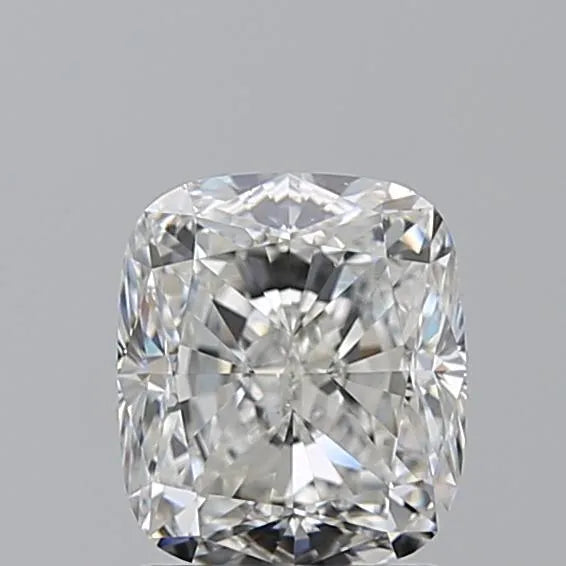
2.00ct Cushion brilliant Natural Diamond (Colour H, Clarity VS2, GIA Certified)
£6,773.00
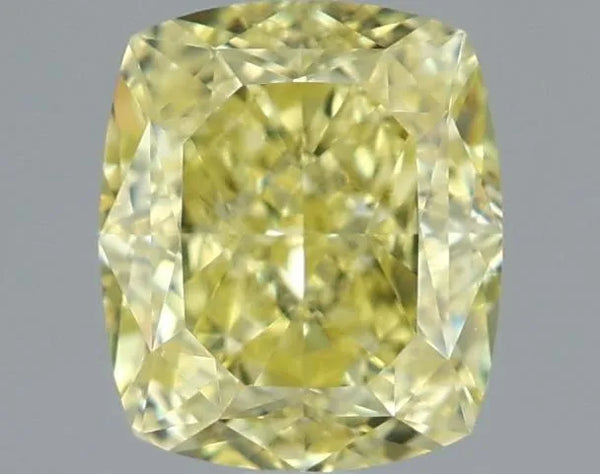
1.02ct Cushion brilliant Natural Diamond (Colour Fancy Intense Yellow, Clarity VS2, GIA Certified)
£4,668.00

1.72ct Cushion brilliant Natural Diamond (Colour E, Clarity SI1, Cut EX, GIA Certified)
£5,458.00

0.32ct Cushion modified Natural Diamond (Colour Fancy Yellow, Clarity I1, GIA Certified)
£466.00
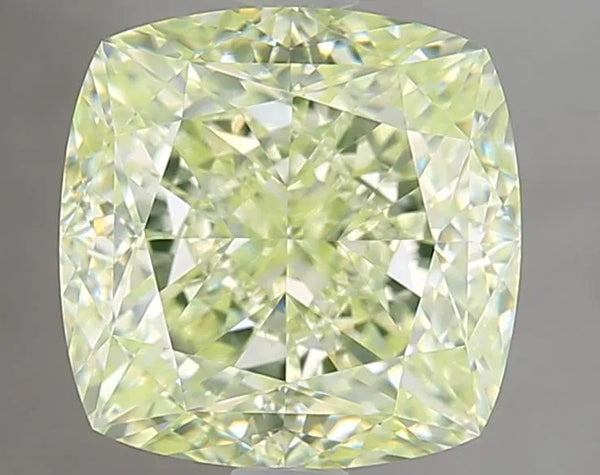
4.00ct Cushion brilliant Natural Diamond (Colour Fancy Light Green, Clarity VVS2, GIA Certified)
£40,822.00
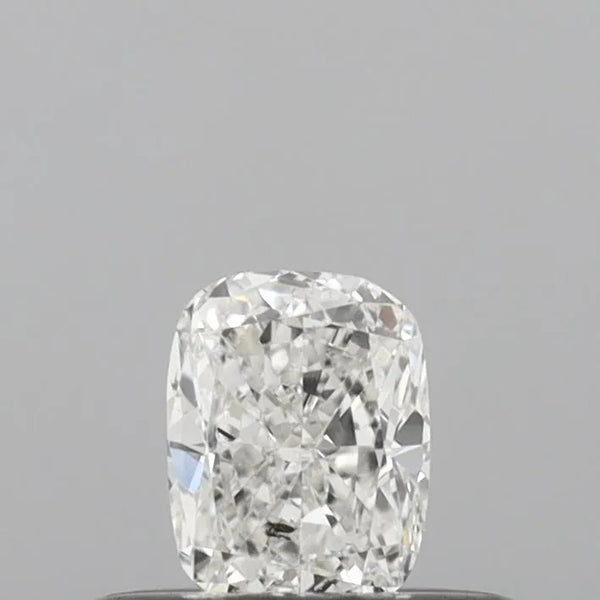
0.30ct Cushion modified Natural Diamond (Colour H, Clarity SI1, Cut GD, IGI Certified)
£202.00
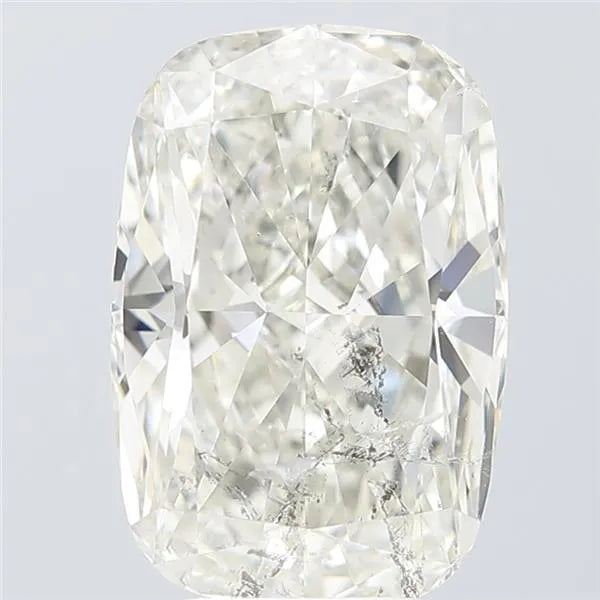
5.02ct Cushion brilliant Natural Diamond (Colour I, Clarity SI2, HRD Certified)
£20,672.00
Loose & certified
Looking to pair it with a ring?
Every diamond on this page is loose — buy it on its own, set it into a ring of your own design, or pair it with one of our settings. Open any stone, click Set in a ring, and we’ll take you to your engagement, eternity or wedding band options.
Already have a setting in mind? Tap the menu icon and choose Engagement Rings › Ring Builder.