-
Engagement ringsWedding ringsEternity ringsDiamondsGemstones
Diamond Band Engagement Rings
What is a diamond band engagement ring?
A diamond band engagement ring features diamonds set continuously or in a pattern along the shank, extending the brilliance of the ring beyond the centre stone alone. This distinguishes it from a plain-shank solitaire, where all visual weight rests at the top. The band diamonds may be set in pavé, channel, or flush settings — each producing a different quality of light return. Pavé places small stones in close rows held by fine metal beads, creating a near-continuous surface of facets. Channel setting recesses each stone between two parallel rails, giving a cleaner, more architectural finish. Flush setting sinks each diamond level with the metal, suited to those who prefer minimal protrusion. The choice between these affects both the look and the practical wearability of the finished ring.
How to choose the right setting style for a diamond band ring
The setting style on a diamond band should complement the centre stone's shape and the overall proportions of the ring. Pavé band settings work across most centre-stone shapes — round brilliants, ovals, and cushions all sit naturally above a pavé shank without competing for attention. Channel-set diamond bands pair particularly well with geometric centre stones such as emerald cuts and Asscher cuts, where the clean lines of the channel echo the step-cut faceting. For a very fine band profile, micro-pavé or flush-set diamonds are preferred, as they keep the shank slender while still adding presence. Metal choice also interacts with the diamond band: platinum and white gold allow the diamonds to read clearly against the shank, while yellow or rose gold introduces warm contrast that can draw the eye along the band intentionally.
What does a diamond band engagement ring cost in the UK?
Diamond band engagement rings carry a broader price range than equivalent plain-shank designs, because the shank diamonds add both material cost and setting labour. The number of diamonds on the band, their combined carat weight, and the setting style all affect the final price — pavé requires more skilled hand-setting time than channel work, which is reflected in the cost. Centre-stone choice remains the largest single cost driver: a 1.0ct round brilliant adds considerably more to the total than a 0.5ct stone, regardless of the band style. For context, Bridebook's 2026 UK average engagement ring spend of £2,247 represents a useful benchmark, though diamond band rings with meaningful shank coverage tend to sit above that figure as the combined diamond weight rises.
How long does a made-to-order diamond band ring take?
Diamond band engagement rings are made to order in our Hatton Garden workshop in 7–14 working days from order confirmation. Simpler channel-set designs sit toward the shorter end of that range; intricate micro-pavé bands with high stone counts or split-shank configurations typically require the full 14 working days. The process begins with a CAD design drawn to your exact specifications, followed by a silver or wax sample that can be reviewed at our Hatton Garden showroom by appointment before casting begins. Once approved, the ring is cast, the band diamonds are individually set, the piece is polished, and it receives its hallmark at the London Assay Office before insured UK delivery. Resizing is free for life.
Caring for a diamond band ring in daily wear
A diamond band ring requires slightly more attention in daily care than a plain-shank ring, because pavé or channel-set stones can accumulate residue in the gaps between settings. Regular gentle cleaning with warm water and a soft brush keeps the diamonds seated clearly and removes the oils and soap films that reduce light return over time. Pavé-set bands should be checked periodically for any loosened bead prongs — a professional inspection once a year is advisable. Channel-set and flush-set diamond bands are more resistant to snagging and are well suited to active daily wear. Platinum shanks are harder than gold and resist the gradual wearing-down of setting edges more effectively, which is relevant when small pavé diamonds are held by fine metal beads over years of wear.
Frequently asked questions
What is a diamond band engagement ring in the UK?
A diamond band engagement ring features diamonds set into the shank of the ring, not only at the centre stone. The band diamonds may run as a full eternity-style row, a half-band, or in a patterned arrangement. This style is available across all centre-stone shapes and in platinum or gold, and every ring is hallmarked at the London Assay Office.
Can I choose any centre stone with a diamond band setting?
Yes. A diamond band setting works with a diamond centre stone, a fancy-colour diamond, or a coloured gemstone. The shank diamond style — pavé, channel, or flush — can be matched to the centre stone's shape and character. Our team advises on proportions during the CAD design stage to ensure the band and centre stone are balanced.
Is pavé or channel better for a diamond band ring?
Pavé settings produce more visible light return along the shank and suit rounded or curved centre-stone shapes. Channel settings give a cleaner, more structured look and are more resistant to snagging, making them practical for daily wear. The best choice depends on the centre stone's cut, the desired aesthetic, and how the ring will be worn alongside a wedding band.
How many diamonds are typically set in the band?
This varies with the design. A half-pavé band on a standard ring size typically carries 20–30 small diamonds; a full pavé band doubles that count. Channel-set bands generally use fewer, slightly larger stones. Combined band diamond weight commonly ranges from 0.2ct to 0.6ct depending on shank width and setting style chosen.
Does President Jewellers offer free resizing on diamond band rings?
Yes. Every ring made in our Hatton Garden workshop includes free resizing for life. For diamond band rings with full pavé coverage, resizing requires careful re-setting of any stones affected by the size adjustment — this is carried out without charge as part of the lifetime resizing commitment.
Featured diamond band engagement rings
Hand-selected pieces from the President Jewellers catalogue

Asteria Compass Diamond Engagement Ring
£1,064.75
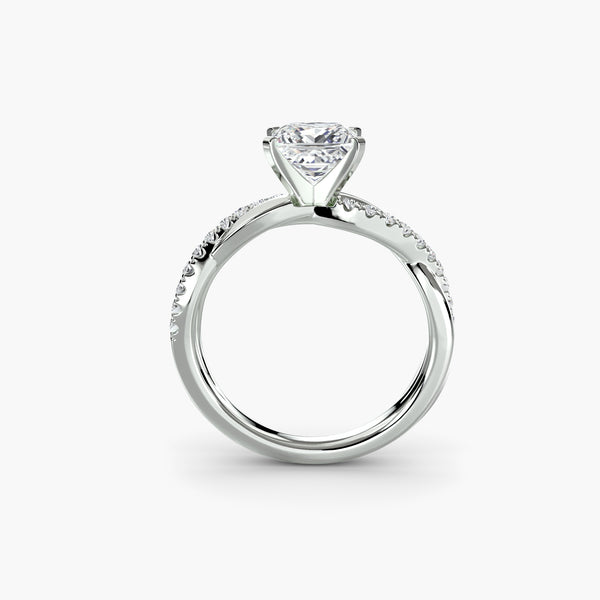
The Emerald Twist Pave Setting
£570.00
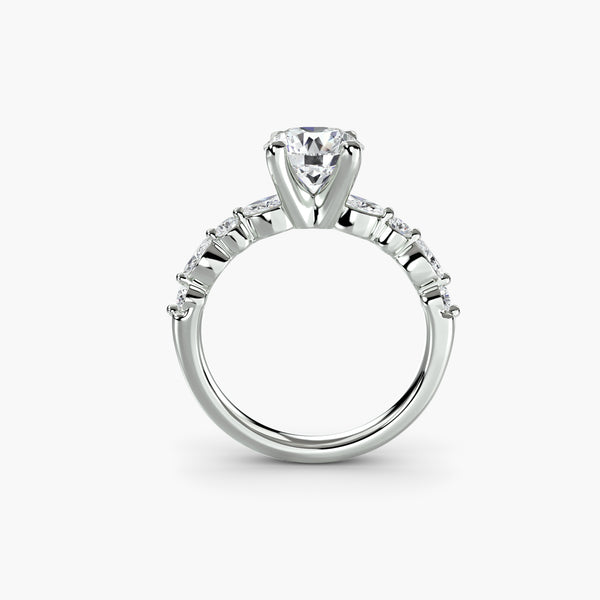
The Infinity Solitaire
£660.00

The Twist Pave Setting
£790.00

The Twisted Pave Solitaire
£560.00

The Eternity Pave Solitaire
£670.00

The Tiered Accent Setting
£670.00

The Shimmer Solitaire
£520.00

The Radiance Solitaire
£550.00

The Cascade Setting
£540.00
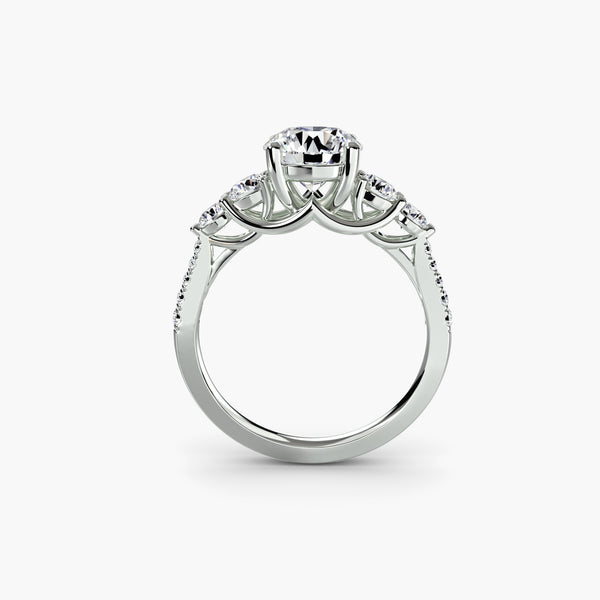
The Five Stone Pave Setting
£570.00
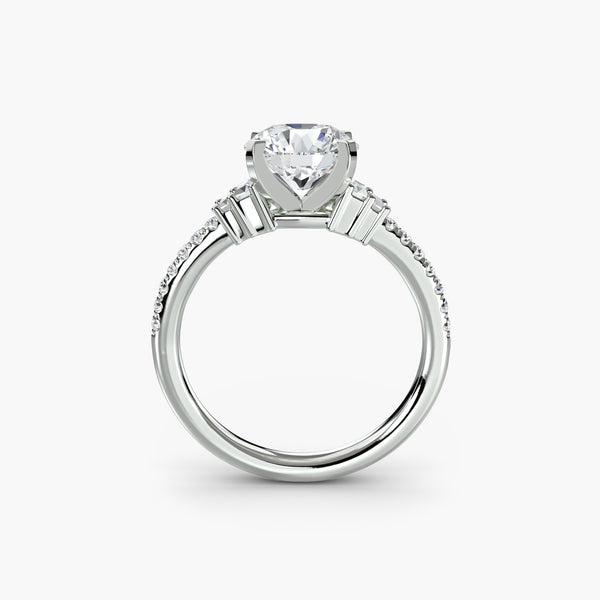
The Lustre Solitaire
£680.00
You might also like
Related collections and pages from President Jewellers
Designing your ring
Designed online. Made by hand.
The convenience of online design.
-
Visualise it
Detailed CADs from every angle, so you see exactly what we’ll cast.
-
Try before we cast
Free ring sizers and a silver or wax sample to confirm the fit and feel before casting.
-
Hand-finished in London
Cast and finished in our London workshop, fully hallmarked and ready in 7–14 working days.
-
Risk-free
Every stone certified. Free refunds within 30 days (21 working) — no questions asked.
Three steps to your ring
-
1
Choose your starting point
-
2
Pair the two
-
3
We craft & deliver
From your first question to your finished ring — our Hatton Garden specialists are here throughout. Crafted for your forever.
From your first question to your finished ring — our Hatton Garden specialists are here throughout. Crafted for your forever.