Halo Oval Engagement Rings
What defines a halo oval engagement ring?
A halo oval engagement ring places a continuous circuit of small accent diamonds around an oval-cut centre stone, framing its elongated outline and increasing the ring's overall face-up diameter. The oval cut itself is a modified brilliant with 57 or 58 facets, typically cut to a length-to-width ratio between 1.30 and 1.50. Ratios closer to 1.30 appear rounder and fuller; ratios nearer 1.50 draw a longer, narrower silhouette. The halo setting complements both ends of that spectrum, softening very narrow ovals and amplifying rounder ones. Because the accent stones follow the oval's curved outline rather than a round perimeter, the setting has a distinctly organic quality that suits both vintage-influenced and contemporary designs.
How to choose the metal for a halo oval ring
The metal choice affects both the visual character of the halo and the long-term durability of the setting. Platinum is the most wear-resistant option and holds each accent diamond securely over decades of daily wear — its naturally white tone also lets a colourless or near-colourless oval appear its brightest. For those who prefer a warmer palette, yellow or rose gold in 9ct, 14ct or 18ct draws out warmth in diamonds graded H–J, which often appear whiter face-up in a yellow setting than they would in platinum. White gold in 9ct, 14ct or 18ct gives a similar look to platinum at a different price point but will require periodic rhodium replating to maintain its tone. A mixed-metal approach — platinum claw settings over a gold band — is also achievable through our bespoke process.
What does a halo oval engagement ring cost in the UK?
Cost is driven by centre-stone carat weight, diamond quality, metal choice, and the number of accent stones in the halo. A halo setting naturally costs more to manufacture than a plain solitaire because each accent diamond must be individually set. Bridebook's 2026 UK average engagement ring spend of £2,247 provides a useful benchmark, though halo oval rings with a 0.5ct–1.0ct oval centre stone in platinum or 18ct gold typically sit above that figure. Lab-grown oval diamonds offer the same cut quality and certification standards as natural stones — GIA, HRD or IGI — at a lower per-carat cost, which allows a larger centre stone or higher colour and clarity grades within the same budget.
How long does a made-to-order halo oval ring take?
Our made-to-order process runs from consultation through CAD design to a silver or wax sample, which can be viewed at our Hatton Garden showroom before the final ring is cast. Halo oval rings are ready in 7–14 working days from order confirmation. Because halo settings involve individually placing each accent diamond around the oval's curved outline, they sit toward the longer end of that range compared with a simple solitaire. Once cast and set, every ring is finished, polished, and hallmarked at the London Assay Office before insured UK delivery. Resizing is complimentary for life, and the ring carries a lifetime warranty.
Caring for a halo oval ring in daily wear
Halo oval rings require slightly more maintenance attention than solitaires because the close-set accent diamonds can trap moisture and residue along the curved channel between stones. A weekly clean with warm water, a drop of washing-up liquid, and a soft brush keeps the setting clear and the oval's facets at their brightest. The halo's individual claw or grain settings should be checked periodically — we recommend a professional check every 12–18 months to confirm no accent stone has shifted. The oval centre stone, set on four or six claws, is well protected, though removing the ring for heavy manual tasks is advisable regardless of metal choice.
Frequently asked questions
What is a halo oval engagement ring?
A halo oval engagement ring features an oval-cut centre diamond or gemstone encircled by a border of smaller accent diamonds. The halo follows the curved outline of the oval, increasing the ring's apparent face-up size and adding contrast between the accent stones and the larger centre stone. The combination suits a wide range of finger profiles.
Does a halo make an oval diamond look bigger?
Yes, in practice. The ring of accent diamonds around the oval's perimeter adds roughly 0.5–1.0mm to the visible diameter on each side, which can make a 0.75ct oval appear closer in presence to a 1.0ct stone. The effect is more pronounced with a tightly set, pavé-style halo than with a more spaced millgrain border.
What length-to-width ratio is best for a halo oval ring?
A ratio between 1.35 and 1.45 is widely considered the most versatile: elongated enough to create the finger-lengthening effect the oval is known for, but not so narrow that the halo setting becomes asymmetric or fragile at the tips. Ratios below 1.30 appear more round than oval; above 1.50 they can look narrow and may not suit all finger widths.
Can I choose a coloured gemstone as the centre stone?
Yes. A halo oval setting works with diamonds, fancy-colour diamonds, and gemstones. Sapphires, rubies, and emeralds are popular oval centre-stone choices. Gemstone durability varies — sapphire and ruby rate 9 on the Mohs scale and are well suited to daily wear, while emerald, at 7.5–8, benefits from a protective bezel or deep claw setting.
Are halo oval rings available in lab-grown diamond options?
Yes. Both the centre oval and the halo accent stones are available in lab-grown diamonds, certified by GIA, HRD or IGI to the same grading standards as natural diamonds. Lab-grown stones allow a larger or higher-quality oval centre stone for a given budget. Natural and lab-grown options are framed neutrally — the choice depends on personal priorities around budget, size, and long-term resale value.
How much does a halo oval engagement ring cost in the UK?
A halo oval engagement ring's price is driven by centre-stone carat weight, diamond quality, and metal choice. A 0.5ct G/VS oval natural diamond in a halo platinum setting commonly sits in the £2,800 to £4,000 band with GIA, IGI or HRD certification; a 1ct oval centre extends to £6,500 to £11,000. Lab grown oval centre stones at the same grade reduce centre stone cost by 60-80 per cent, allowing 1.5ct or 2ct ovals in a halo setting within typical UK engagement ring budgets. The halo accent diamonds themselves add £400 to £800 to the mounting cost depending on the total carat weight of the surround. Bridebook's 2026 UK average engagement ring spend of £2,247 typically suits a halo oval with a 0.3ct to 0.5ct centre, depending on grade and metal.
Does a halo help mask the bow-tie effect in an oval diamond?
Yes, to some extent. The bow-tie — a dark butterfly-shaped shadow visible across the centre of many oval diamonds — is caused by light leakage through the pavilion facets. A halo of accent diamonds around the perimeter of the oval introduces additional bright reflections at the edges, which optically draws the eye outward and reduces the contrast between the bow-tie shadow and the rest of the stone. The bow-tie itself is not eliminated, but its visual prominence is meaningfully reduced. This is one reason halo settings are particularly popular with elongated brilliant cuts (oval, pear, marquise) where bow-ties are most common. Still, request a video of the actual stone before purchase — severe bow-ties show through any setting.
Featured halo oval engagement rings
Hand-selected pieces from the President Jewellers catalogue
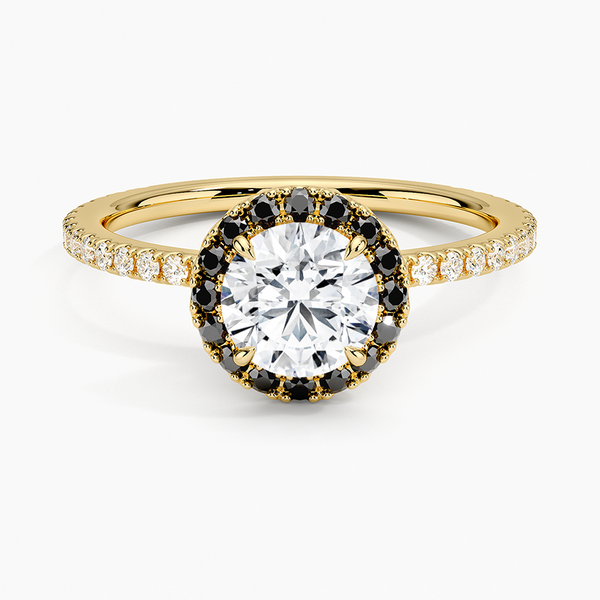
Waverly Halo Diamond Ring with Black Diamond Accents Engagement Ring
£1,483.16

Waverly Halo Diamond Engagement Ring
£1,548.68

Tacori Petite Crescent Bloom Diamond Engagement Ring
£5,740.14
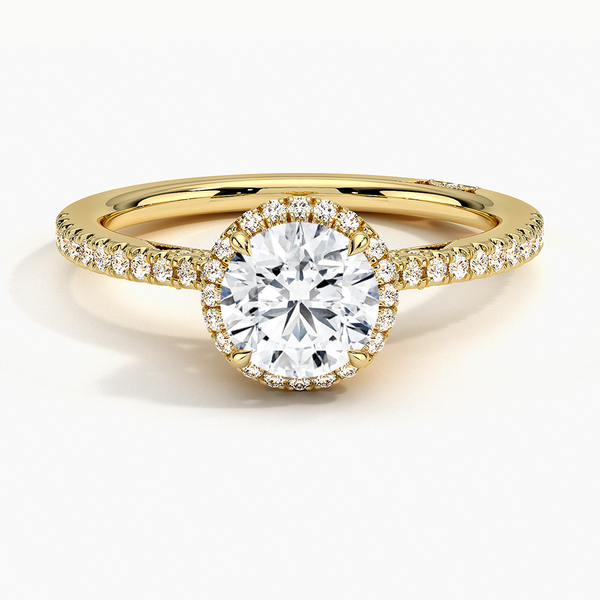
Simply Tacori Cathedral Drape Diamond Engagement Ring
£3,180.13

Sienna Halo Three-Quarter Coverage Diamond Engagement Ring
£2,099.05
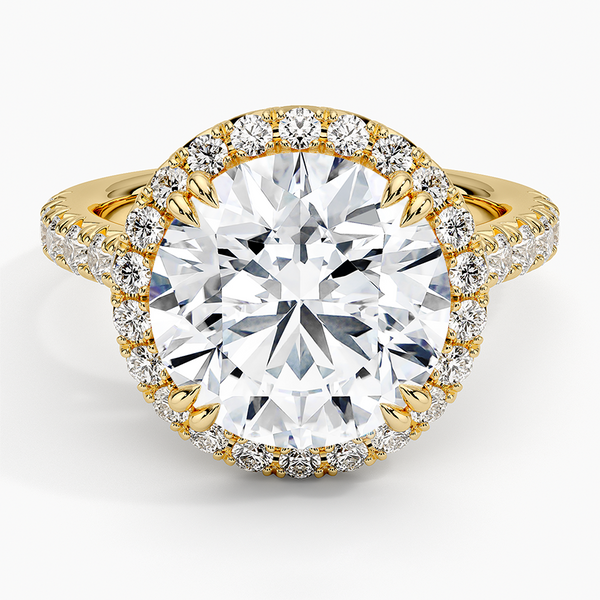
Sienna Halo Half Coverage Diamond Engagement Ring
£2,072.84
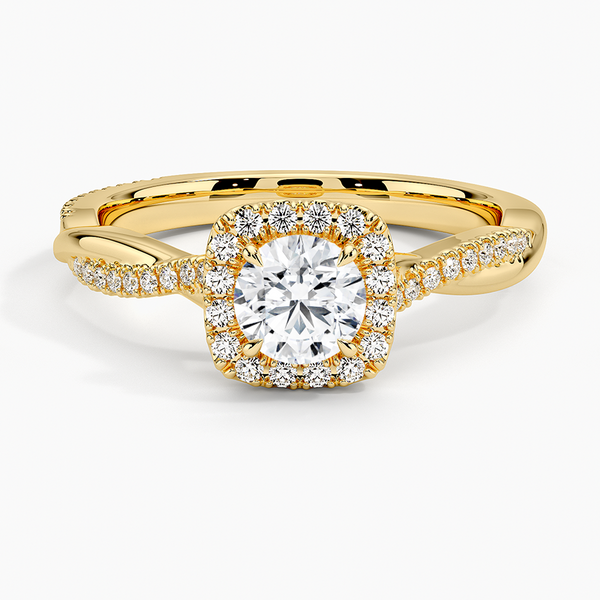
Petite Twisted Vine Halo Diamond Engagement Ring
£1,614.20

Odessa Halo Diamond Engagement Ring
£1,286.60
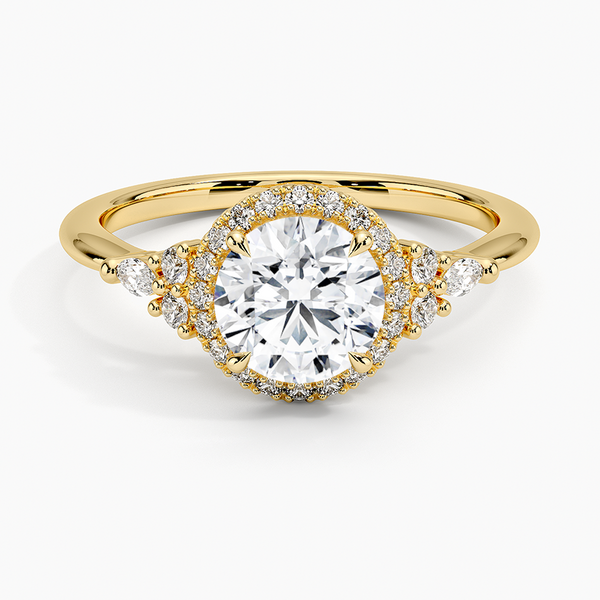
Nadia Halo Diamond Engagement Ring
£1,483.16
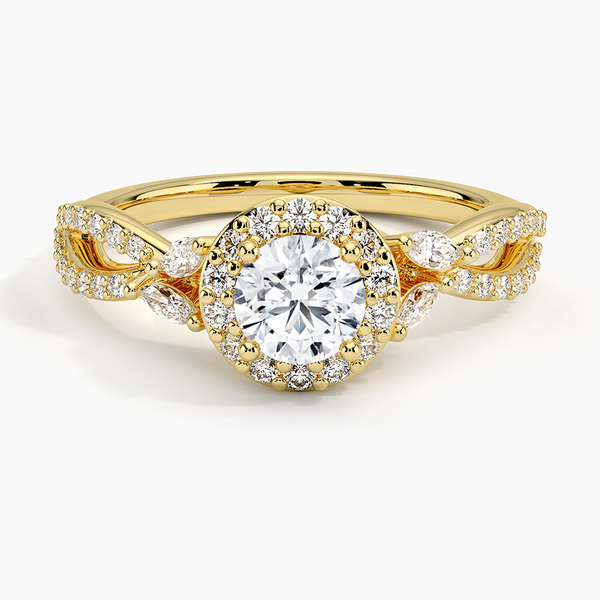
Luxe Willow Halo Diamond Engagement Ring
£1,705.93

Lotus Flower Halo Diamond Engagement Ring
£1,352.12
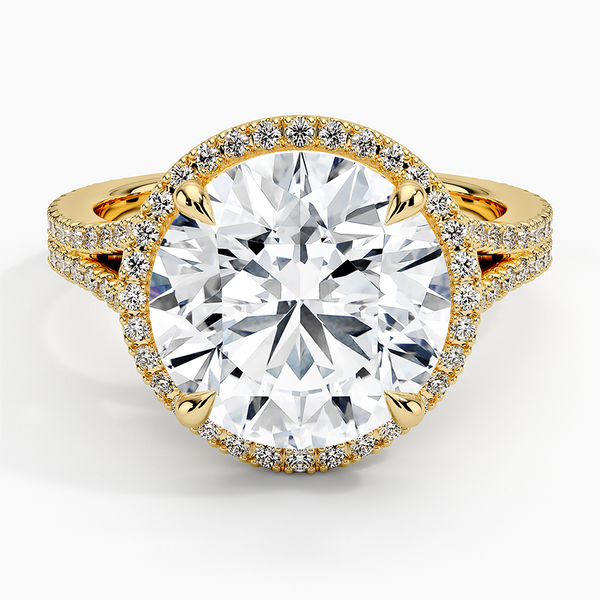
Fortuna Halo Diamond Engagement Ring
£2,203.88
Designing your ring
Designed online. Made by hand.
The convenience of online design.
-
Visualise it
Detailed CADs from every angle, so you see exactly what we’ll cast.
-
Try before we cast
Free ring sizers and a silver or wax sample to confirm the fit and feel before casting.
-
Hand-finished in London
Cast and finished in our London workshop, fully hallmarked and ready in 7–14 working days.
-
Risk-free
Every stone certified. Free refunds within 30 days (21 working) — no questions asked.
Three steps to your ring
-
1
Choose your starting point
-
2
Pair the two
-
3
We craft & deliver