Halo Pear Engagement Rings
What defines a halo pear engagement ring?
A halo pear engagement ring pairs a pointed-at-one-end, rounded-at-the-other centre stone with a continuous frame of smaller accent diamonds that trace its outline precisely. The combination amplifies the perceived size of the pear and reinforces its distinctive asymmetric profile. The pear shape — sometimes called a teardrop — typically carries a length-to-width ratio between 1.45 and 1.75; ratios toward the longer end read as especially slender on the finger. The halo adds visual mass without increasing carat weight, which makes it a practical route to a bold look within a set budget. Because the pear has a pointed tip, the halo also provides a degree of physical protection to that vulnerability. The result is a ring that reads as architectural rather than incidental — a deliberate composition of line and light.
How does a halo setting interact with the pear shape specifically?
The relationship between a halo and a pear shape is more compositional than it is with a round or cushion. A round halo is inherently symmetrical; a pear halo must taper to a point at one end and curve generously at the other, which demands precise stone-setting at the tip where accent diamonds sit in tight formation. This asymmetry means the quality of the setting work is more visible on a halo pear than on most other combinations. A well-executed halo pear will have accent diamonds that follow the outline without any gaps or crowding, maintaining a continuous border. The halo also accentuates the elongating effect that pear-shaped stones are known for — on shorter fingers this can add a noticeable sense of length. Choosing a slightly wider halo with larger accent diamonds further amplifies this effect, while a micro-pavé halo keeps the silhouette refined and close to the centre stone's natural proportions.
Which metal suits a halo pear engagement ring?
Metal choice for a halo pear ring affects both durability and the visual relationship with the centre stone. Platinum and white gold keep the accent diamonds in the halo visually unified with the centre stone, letting the pear shape read clearly without colour interruption. Rose gold introduces warmth that can complement lower-colour diamonds — in the G–J range — by softening any faint yellow tint into a cohesive tone. Yellow gold pairs well with fancy-colour centre stones and with warmer near-colourless diamonds. Where gold is the preferred choice, settings are available in 9ct, 14ct and 18ct, with 18ct offering the richest colour and a finer finish; platinum is the hardest-wearing option and holds prong tips over a pear's pointed end particularly securely over long-term daily wear. The metal decision should be made alongside the colour grade of the chosen stone.
What does a halo pear engagement ring cost in the UK?
Price is driven by the carat weight and quality of the centre stone, the total weight of accent diamonds in the halo, and the choice of metal. A halo pear ring with a 0.5ct centre stone will sit at a markedly different price point than one with a 1.0ct or 1.25ct centre, and the difference compounds when the halo's accent stones are included in the total diamond weight calculation. Bridebook's 2026 UK average engagement ring spend of £2,247 provides a useful benchmark, but halo pear rings span a wide range above and below that figure depending on specification. Lab-grown pear-shaped centre stones offer the same certification standards as natural diamonds — graded by GIA, IGI or HRD — at a lower cost per carat, which allows a larger or higher-colour stone within a given budget. Natural pear-shaped diamonds with strong cut symmetry command a premium, particularly at ratios that maintain even shoulders.
How long does a halo pear engagement ring take to make?
Halo pear rings are made to order in our Hatton Garden workshop. The process moves from consultation and CAD design to a silver or wax sample that can be viewed and tried on at our showroom before casting begins. Once the design is confirmed, the ring is cast, set, finished, polished and hallmarked at the London Assay Office. Lead time is 7–14 working days from order confirmation. A halo pear sits toward the longer end of that range — the tapered halo tip requires careful hand-setting of accent diamonds, which adds time relative to a plain solitaire. Resizing is free for life, and the ring is dispatched on complimentary insured UK delivery.
Frequently asked questions
What is a halo pear engagement ring?
A halo pear engagement ring features a teardrop-shaped centre stone — pointed at one end, rounded at the other — surrounded by a border of smaller accent diamonds that follow the stone's outline. The halo increases the ring's visual presence and protects the pear's pointed tip. The combination is known for elongating the finger and creating a strong, directional silhouette.
Which way should a pear-shaped stone face in the ring?
Convention places the point of the pear toward the fingernail, but there is no rule. Some wearers prefer the rounded end facing outward. The more important consideration is symmetry: the two shoulders of the pear should curve evenly, and the point should fall precisely on the central axis of the ring. A halo makes any misalignment more visible, so stone symmetry matters more here than in a plain solitaire.
Do halo pear rings make the stone look larger?
Yes — a halo adds a full border of accent diamonds around the centre stone, increasing the visible face-up diameter without increasing the carat weight of the centre stone itself. A 0.75ct pear with a halo can read visually closer to a 1.0ct solitaire. The elongated pear outline further amplifies this effect because the shape already reads larger face-up relative to its actual weight.
Is a pear-shaped diamond prone to chipping in a halo setting?
The pointed tip of a pear-shaped diamond is the most vulnerable area, but a well-designed halo setting places a prong or bezel element directly at the tip to protect it. Diamonds are the hardest natural material, so chipping requires significant impact at a specific angle. Choosing a halo setting specifically helps because it provides structural support at the tip alongside the accent stones.
Can a halo pear ring be set with a gemstone rather than a diamond?
Yes. Sapphires, rubies, emeralds and other gemstones are available as centre stones in a halo pear setting. Sapphire and ruby, both rating 9 on the Mohs scale, are well-suited to daily wear. Emerald is softer and requires more care. The halo accent diamonds work equally well around a coloured centre stone — the white diamond frame can intensify or contrast the centre stone's colour depending on the chosen combination.
Featured halo pear engagement rings
Hand-selected pieces from the President Jewellers catalogue
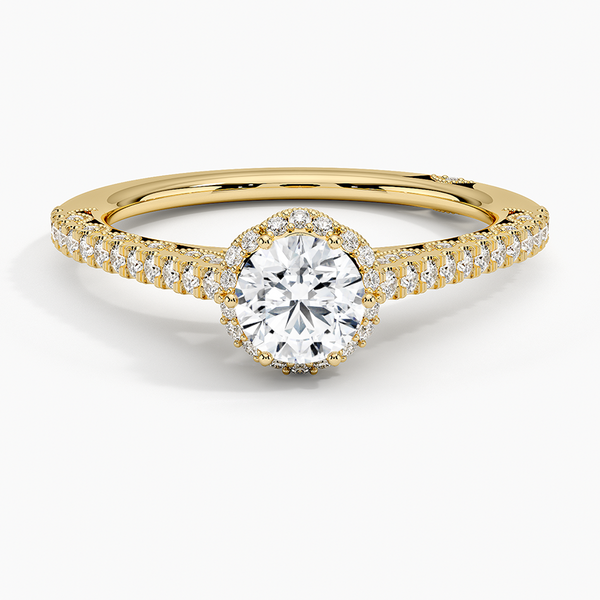
Tacori Petite Crescent Classic Bloom Diamond Engagement Ring
£4,579.89
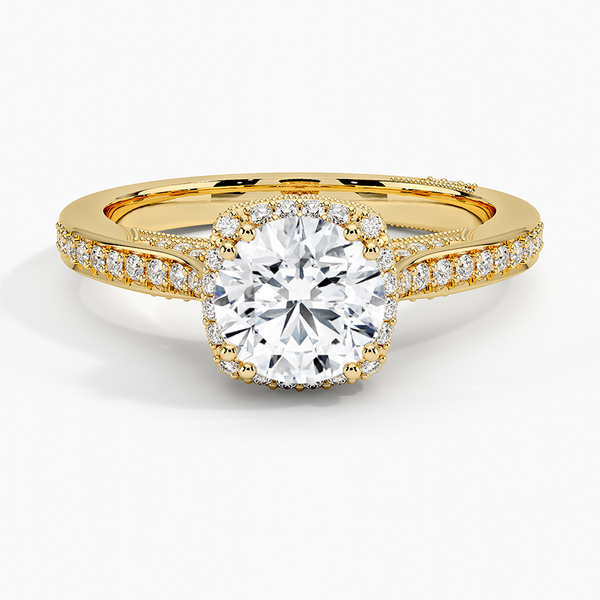
Tacori Dantela Bloom Diamond Engagement Ring
£3,954.72
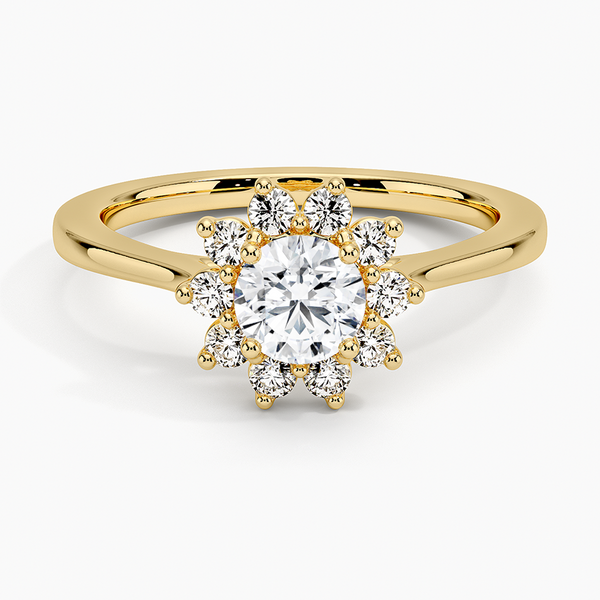
Sunburst Halo Diamond Engagement Ring
£1,509.37
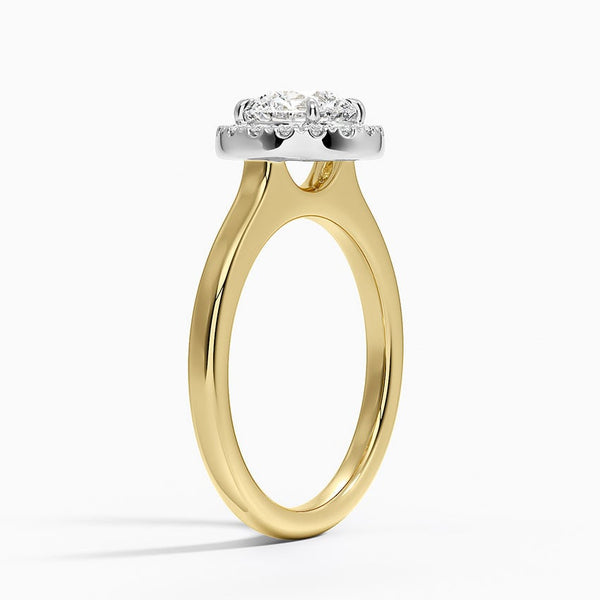
Platinum Mixed Metal Julia Halo Diamond Engagement Ring
£1,810.76
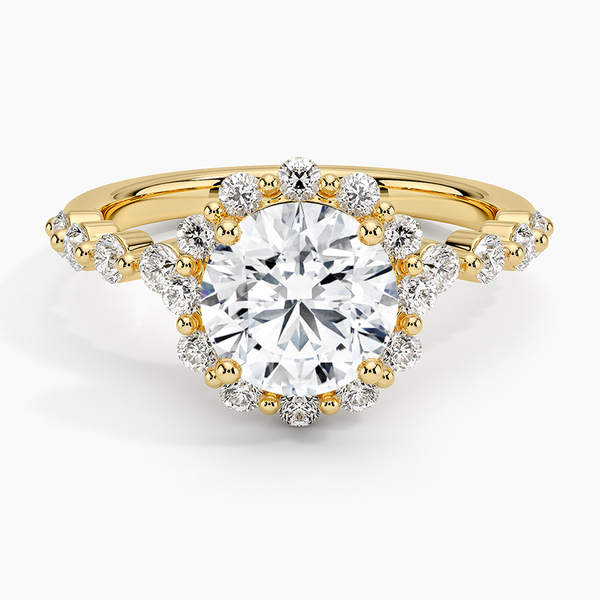
Marseille Halo Diamond Engagement Ring
£2,007.32
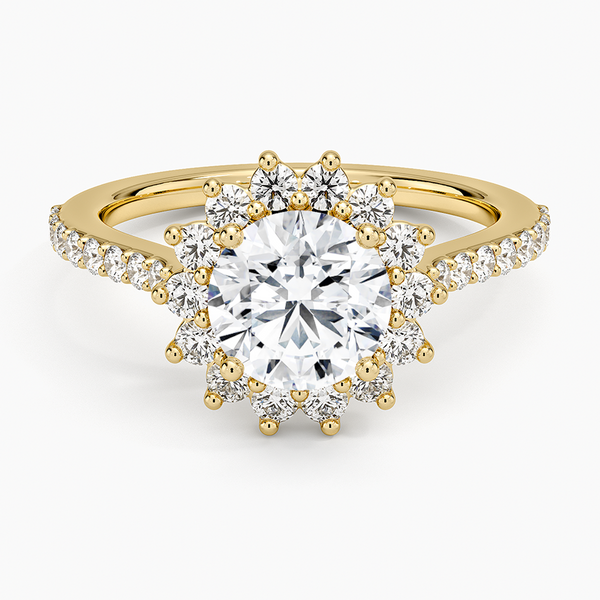
Luxe Sunburst Halo Diamond Engagement Ring
£1,745.24

Joy Half Coverage Diamond Engagement Ring
£1,443.85
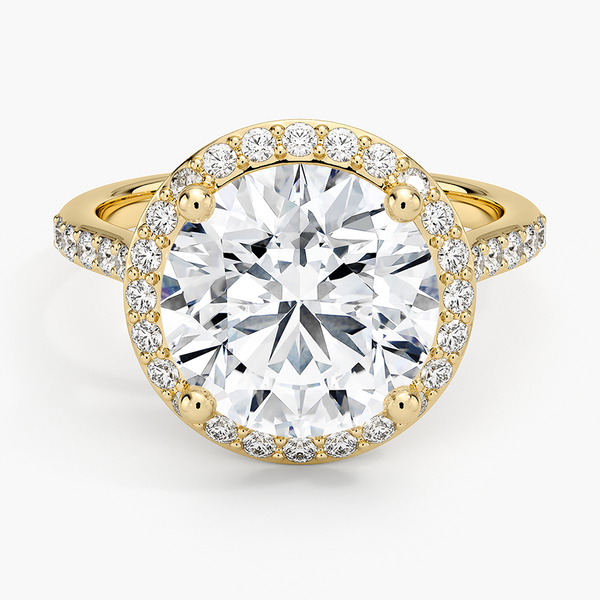
Halo Diamond Ring with Side Stones Engagement Ring
£1,443.85
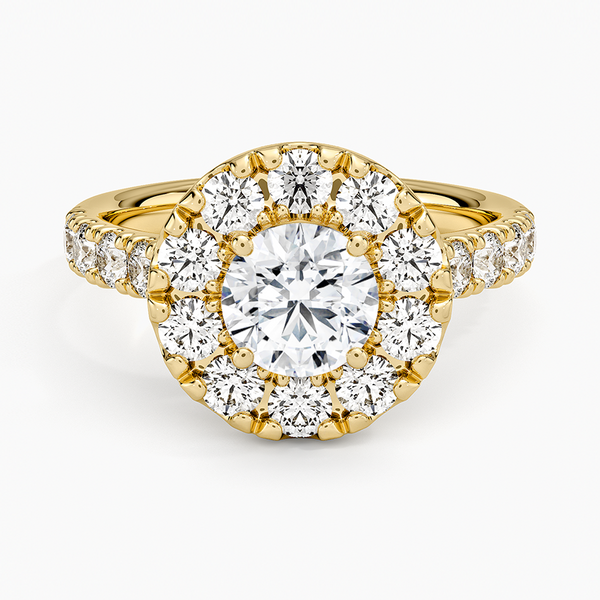
Adele Halo Diamond Engagement Ring
£2,334.92

Minerva Halo Engagement Ring
£1,367.35
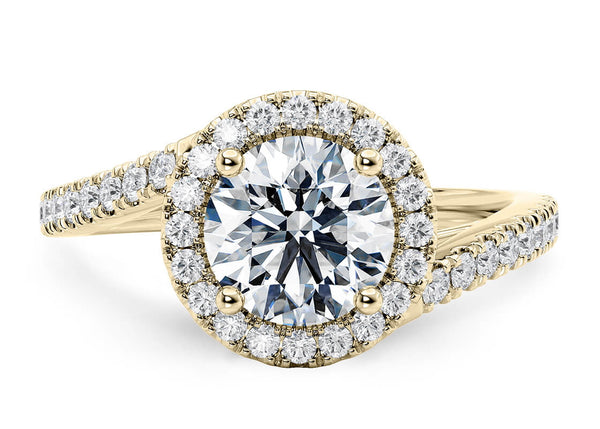
Kew Halo Engagement Ring
£1,420.09
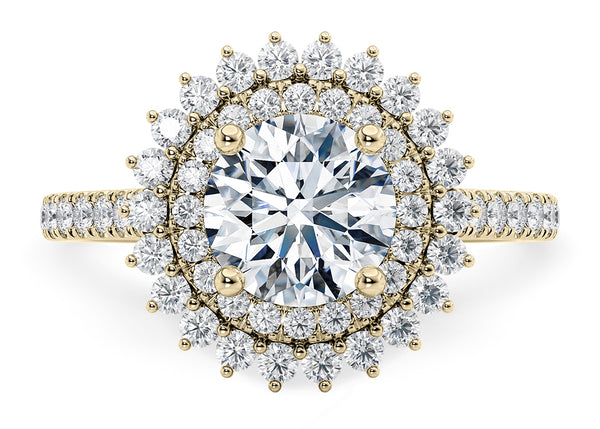
Berkeley Halo Engagement Ring
£1,940.50
Designing your ring
Designed online. Made by hand.
The convenience of online design.
-
Visualise it
Detailed CADs from every angle, so you see exactly what we’ll cast.
-
Try before we cast
Free ring sizers and a silver or wax sample to confirm the fit and feel before casting.
-
Hand-finished in London
Cast and finished in our London workshop, fully hallmarked and ready in 7–14 working days.
-
Risk-free
Every stone certified. Free refunds within 30 days (21 working) — no questions asked.
Three steps to your ring
-
1
Choose your starting point
-
2
Pair the two
-
3
We craft & deliver