Heart Lab Grown Diamonds
What is a heart lab grown diamond?
A heart lab grown diamond is a brilliant-cut stone grown in a controlled laboratory environment and then hand-faceted into a symmetrical heart outline — the same carbon crystal structure as a mined diamond, produced without open-cast extraction. The heart shape is a modified brilliant, typically carrying 56 to 59 facets arranged to draw light through two rounded lobes and a pointed culet. Because the shape is optically demanding — any asymmetry between the left and right lobes is immediately visible — cut precision matters more here than with many other fancy shapes. Lab grown production allows cutters to work from a larger, inclusion-free rough than is often available in mined parcels, which can favour the tight symmetry a well-cut heart requires. The result is a stone that reads as a recognisable silhouette without sacrificing the light return associated with round or cushion brilliants.
Choosing the right length-to-width ratio for a heart lab grown diamond
For heart lab grown diamonds, a length-to-width ratio between 0.95 and 1.05 produces the most balanced silhouette — lobes of equal width, a clean cleft, and a pointed base that sits centrally in its setting. Ratios below 0.90 produce a wide, squat heart that can look indistinct at smaller carat weights; ratios above 1.10 create a narrow, elongated outline that may suit a longer finger but tends to lose the characteristic heart read. At weights of 0.5ct and below, the shape outline can compress significantly, so a higher colour grade — typically G or above — and a cleaner clarity grade help maintain visual definition. From 0.75ct upwards, the heart silhouette becomes self-evident and allows slightly more flexibility on colour. When set into a ring, a bezel or three-claw setting that follows the heart's outline preserves the shape best; a four-claw prong arrangement at the two lobes, cleft, and point is the most common choice.
How do heart lab grown diamonds compare on price?
Heart lab grown diamonds are priced meaningfully below equivalent mined stones of the same carat weight, colour, and clarity — the per-carat premium for a natural heart diamond reflects both rarity and the cost of extraction that lab production bypasses. As a fancy shape, the heart also tends to be cut from rough that would otherwise yield waste, meaning carat-for-carat it can offer more visible size than a round brilliant of the same stated weight. For buyers working within a fixed budget, a lab grown heart diamond can deliver a noticeably larger or better-specified stone than a natural equivalent at the same spend. Bridebook's 2026 UK average engagement ring spend of £2,247 gives a useful anchor, and a certified heart lab grown diamond in the 0.75ct to 1.0ct range with VS2 clarity and G colour sits comfortably within or around that figure when bought loose. When set into one of our rings, the full ring cost will depend on metal choice and setting complexity.
Are heart lab grown diamonds certified to the same standard as natural diamonds?
Every heart lab grown diamond in this collection is certified by GIA, HRD or IGI — the same internationally recognised laboratories that grade natural diamonds. The certificate records the stone's carat weight, colour grade, clarity grade, cut grade, and fluorescence; for a heart shape, the grading report will also note symmetry and polish, both of which are critical to the shape's visual balance. Lab grown origin is disclosed on the certificate, as required by all three laboratories. The carbon crystal lattice of a lab grown diamond is physically and chemically identical to a mined stone, and the grading criteria applied are unchanged. When a loose heart lab grown diamond is subsequently set into one of our rings, the finished piece is hallmarked at the London Assay Office.
Caring for a heart lab grown diamond
A heart lab grown diamond shares the hardness of any diamond — 10 on the Mohs scale — and will not scratch under normal wear. The two points of vulnerability specific to the heart shape are the pointed culet at the base and the cleft between the two lobes; both are thin sections of stone where a sharp lateral impact can cause chipping. A setting that protects the point with a V-shaped or bezel prong significantly reduces this risk. For cleaning, warm water with a small amount of mild detergent and a soft brush is sufficient; ultrasonic cleaners are safe for diamonds but should be used with caution if the setting includes softer accent stones. Periodic checks of the prongs — particularly those at the cleft and point — are advisable, and our rings carry a lifetime warranty that covers workmanship.
Frequently asked questions
Where can I buy a heart lab grown diamond in the UK?
President Jewellers offers certified heart lab grown diamonds available loose or set into one of our rings, with complimentary insured UK delivery. Each stone is certified by GIA, HRD or IGI. Loose purchases carry a 30-day return period, no questions asked, with no exclusions. Try-on appointments for set rings are available at our Hatton Garden workshop by arrangement.
What carat weight works best for a heart diamond shape?
From 0.75ct upwards, the heart silhouette is clearly legible in most settings. Below 0.5ct, the outline can lose definition depending on the setting style and finger size. A heart lab grown diamond in the 0.75ct to 1.25ct range tends to offer the best balance of visible shape, cut quality, and budget — particularly when prioritising symmetry and a G or better colour grade.
Is a heart lab grown diamond a real diamond?
Yes. A heart lab grown diamond is chemically, physically, and optically identical to a mined diamond. It is composed of pure carbon in a cubic crystal structure, measures 10 on the Mohs hardness scale, and is graded using the same criteria by GIA, HRD or IGI. The only difference is origin: lab grown diamonds are produced in a controlled environment rather than extracted from the earth.
Can a heart lab grown diamond be returned if I change my mind?
Loose heart lab grown diamonds purchased from President Jewellers carry a 30-day return period, no questions asked, with no exclusions. Once a loose stone has been set into one of our rings, the ring return policy applies: 30 days for standard orders, with custom and bespoke rings excluded. All returns are covered by our complimentary insured delivery.
How long does it take to set a heart lab grown diamond into a ring?
Once a loose heart lab grown diamond is selected and a ring design confirmed, the process moves through CAD design, a silver or wax sample for try-on at our Hatton Garden showroom, casting, setting, polishing, and hallmarking at the London Assay Office. Lead time is 7 to 14 working days from order confirmation, with simpler solitaire settings at the shorter end and more intricate pavé designs at the longer end.
How much does a 1 carat heart lab grown diamond cost in the UK?
A 1 carat heart lab grown diamond in the UK typically ranges from around £700 to £2,200 depending on colour, clarity, cut and symmetry. A G colour, VS clarity, Very Good symmetry 1ct heart lab grown commonly sits in the £900 to £1,500 band — versus £4,500 to £6,500 for an equivalent natural heart. Because heart shapes discard substantial rough during cutting, lab grown origin offers particularly meaningful savings on this shape. Prioritise symmetry grade over carat weight: a smaller heart with Excellent symmetry presents far better than a larger heart with asymmetric lobes.
How does a heart lab grown diamond compare to a natural heart diamond?
A heart lab grown diamond is chemically and physically identical to a natural heart diamond — both are pure carbon graded against the same 4Cs by GIA, HRD or IGI. The differences are price (lab grown sits 65-80% below natural at comparable spec, making heart shapes particularly accessible in lab grown origin), origin (laboratory growth versus geological formation), and long-term resale value (natural hearts hold value more reliably). The visible appearance is indistinguishable, and the structural vulnerability of the cleft and point applies equally to both — V-claw or partial bezel protection is essential regardless of origin.
Featured heart lab grown diamonds
Hand-selected pieces from the President Jewellers catalogue
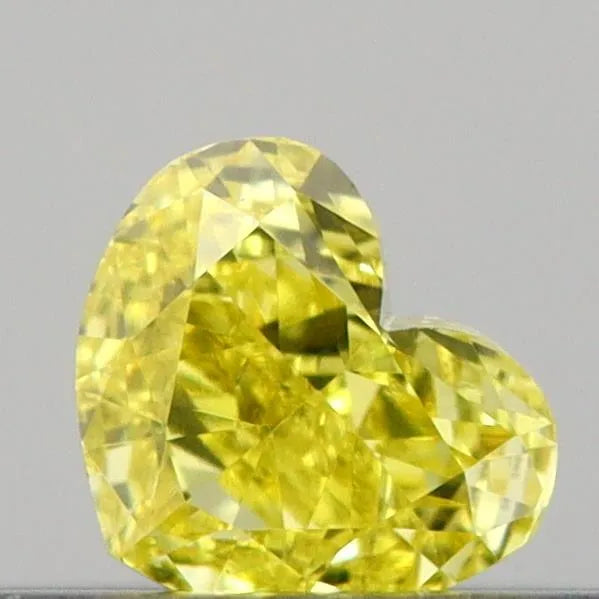
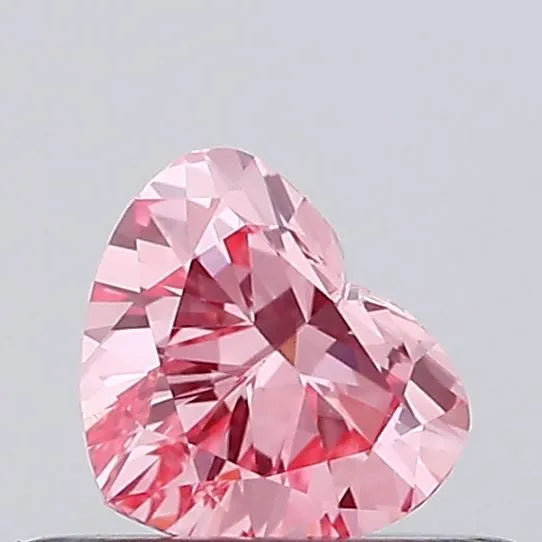
Loose & certified
Looking to pair it with a ring?
Every diamond on this page is loose — buy it on its own, set it into a ring of your own design, or pair it with one of our settings. Open any stone, click Set in a ring, and we’ll take you to your engagement, eternity or wedding band options.
Already have a setting in mind? Tap the menu icon and choose Engagement Rings › Ring Builder.