-
Engagement ringsWedding ringsEternity ringsDiamondsGemstones
Oval Lab Grown Diamonds
What is an oval lab grown diamond?
An oval lab grown diamond is a diamond crystallised in a laboratory using either HPHT or CVD methods, then cut into an elongated brilliant shape with 57 or 58 facets. Chemically, optically and physically it is identical to a mined diamond. The oval cut traces back to Lazare Kaplan's 1957 refinement of the modern brilliant, taking the fire of a round and stretching it along a length-to-width ratio typically between 1.30 and 1.50. Lab grown ovals appeal to buyers who want a larger spread on the finger for the budget — an oval reads visibly larger than a round of the same carat weight, and the lab origin compounds that value. Every stone we list carries a report from GIA, HRD or IGI detailing the 4Cs, measurements and any treatments.
How to choose an oval lab grown diamond
Start with the length-to-width ratio. Most buyers prefer 1.35 to 1.45 for a classic oval silhouette; below 1.30 reads almost round, above 1.50 looks distinctly elongated. Next, check the certificate for a bow-tie — a dark shadow across the centre caused by light leakage. Lab grown ovals can show pronounced bow-ties, so request video or images before committing. For colour, oval cuts retain warmth at the tips, so G or H grades sit safely white in platinum or white gold, while I and J grades pair well with yellow gold. Clarity of VS2 or SI1 is generally eye-clean at this shape, with inclusions easier to hide near the ends. Carat weight tends to display generously: a 1.5ct oval often presents like a 1.75ct round on the hand.
What does an oval lab grown diamond cost in the UK?
Oval lab grown diamonds are typically priced 60 to 80 per cent below natural ovals of comparable spec, with the gap widening at larger carats. Price drivers remain the 4Cs — carat weight, colour, clarity and cut quality — alongside the certifying laboratory. For context, Bridebook's 2026 UK average engagement ring spend of £2,247 stretches considerably further with a lab grown oval, often allowing a buyer to step up a full carat grade or move from SI to VS clarity while staying within budget. Carat thresholds at 1.0ct, 1.5ct and 2.0ct mark visible jumps in price. Lab grown stones hold less resale value than naturals, so the choice often depends on whether long-term value matters more than size and spec at point of purchase.
Buying a loose oval lab grown diamond or having it set
Every oval lab grown diamond on this page can be purchased loose and shipped with its certificate, or reserved as the centre stone for one of our rings. If set into a ring, the design moves through CAD, a silver or wax sample for try-on at our Hatton Garden showroom, casting, setting, polishing and London Assay Office hallmarking — typically 7 to 14 working days depending on complexity. Oval lab grown diamonds suit solitaires, hidden halos, three-stone settings and east-west orientations particularly well. Loose-stone purchases carry 30 days to return with no exclusions; rings carry a lifetime warranty and free resizing for life.
Frequently asked questions
Are oval lab grown diamonds real diamonds?
Yes. Oval lab grown diamonds are chemically, optically and physically identical to mined diamonds — pure crystallised carbon with the same hardness, brilliance and fire. The only difference is origin: laboratory growth instead of geological formation. Both are graded by the same laboratories — GIA, HRD and IGI — using the same 4Cs criteria, and both are sold here as certified diamonds.
How do I avoid a bow-tie on an oval lab grown diamond?
Bow-ties are inherent to the oval cut but vary in severity. Always view a video or 360-degree image of the actual stone before purchase rather than relying on the grading report alone. Look for even light return across the centre — a faint shadow is acceptable, a dark band that closes off the middle is not. Cut quality on the certificate is the strongest predictor.
What length-to-width ratio is best for an oval lab grown diamond?
Most buyers prefer a ratio between 1.35 and 1.45 for a balanced classic oval. Ratios below 1.30 begin to look rounded and lose the elongating effect on the finger. Ratios above 1.50 read as distinctly long and narrow, which some prefer for an east-west setting or a more dramatic silhouette. Personal preference matters more than any single rule.
Can I set a loose oval lab grown diamond into any ring?
Yes. Any oval lab grown diamond bought here can be set into one of our ring designs — solitaire, halo, hidden halo, three-stone or bespoke — in platinum or gold. The setting process takes 7 to 14 working days from order confirmation. Every finished ring is hallmarked at the London Assay Office and delivered insured with a lifetime warranty.
Do oval lab grown diamonds hold their value?
Lab grown diamonds, including ovals, generally hold less resale value than natural diamonds. Their price has trended downward as production has scaled. If long-term resale matters most, a natural oval is the stronger choice. If maximum size and spec for the budget at the point of purchase matters more, a lab grown oval delivers significantly more diamond per pound.
How much does a 1 carat oval lab grown diamond cost in the UK?
A 1 carat oval lab grown diamond in the UK typically ranges from around £550 to £2,200 depending on colour, clarity, cut and length-to-width ratio. A G colour, VS clarity, classic 1.35-1.45 ratio 1ct oval commonly sits in the £800 to £1,400 band — visibly larger on the finger than a 1ct round at the same spec, for a similar or lower price. Premium D-F colour, VVS clarity stones extend the range upward. Across every carat tier, oval lab grown diamonds offer strong value against natural ovals of the same specification.
Does an oval lab grown diamond look bigger than a round?
Yes. An oval diamond of the same carat weight as a round brilliant typically reads 10-15 per cent larger face-up because the elongated shape spreads the visible surface area across a longer dimension. A 1ct oval at a length-to-width ratio of 1.40 measures roughly 7.0mm × 5.0mm, while a 1ct round measures roughly 6.5mm across. On the finger, the oval's length is the eye-catching dimension. For buyers prioritising visual scale per carat — and per budget — an oval lab grown diamond is one of the most efficient shape choices available.
Featured oval lab grown diamonds
Hand-selected pieces from the President Jewellers catalogue
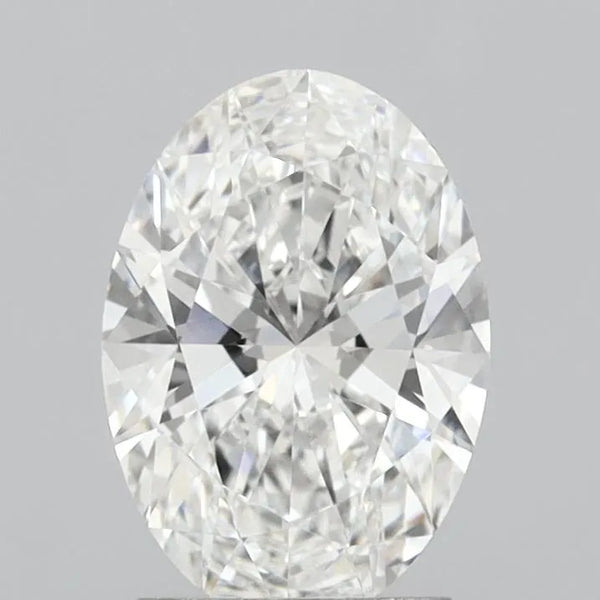
2.08ct Oval Lab Grown Diamond (Colour E, Clarity VVS1, IGI Certified)
£417.00
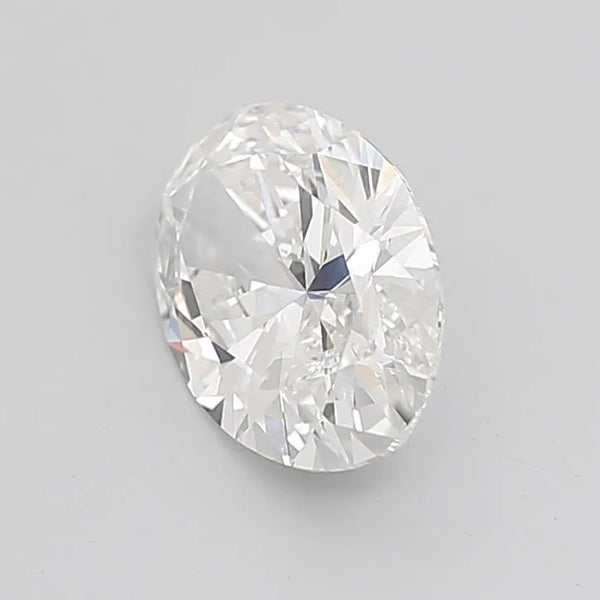
3.06ct Oval Lab Grown Diamond (Colour E, Clarity VS1, IGI Certified)
£582.00
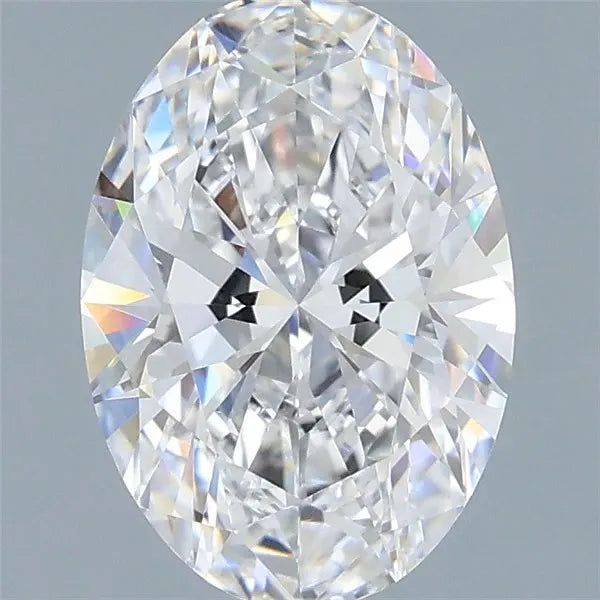
1.57ct Oval Lab Grown Diamond (Colour D, Clarity VVS1, IGI Certified)
£270.00
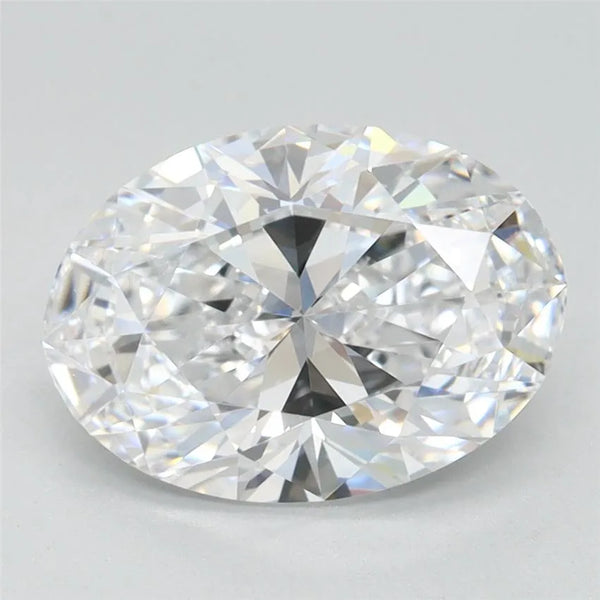
2.00ct Oval Lab Grown Diamond (Colour D, Clarity FL, IGI Certified)
£751.00
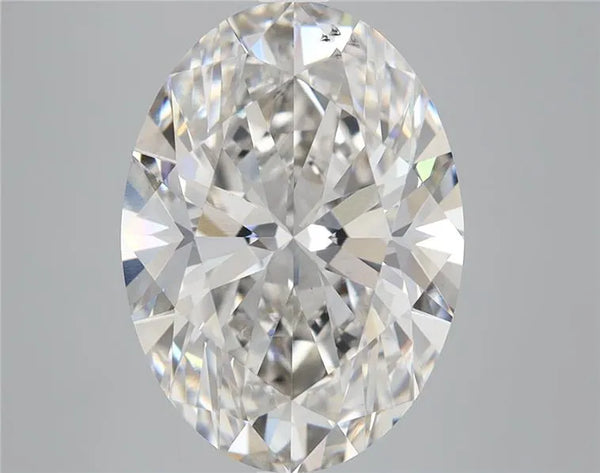
5.00ct Oval Lab Grown Diamond (Colour H, Clarity VS2, IGI Certified)
£637.00
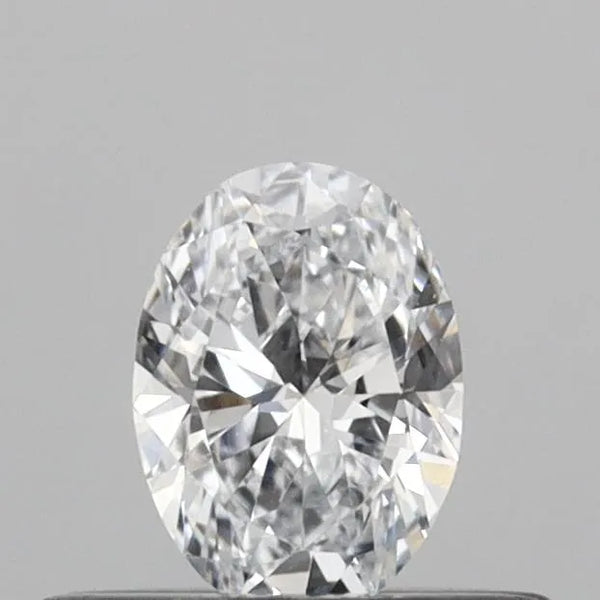
0.28ct Oval Lab Grown Diamond (Colour D, Clarity VVS1, IGI Certified)
£78.00
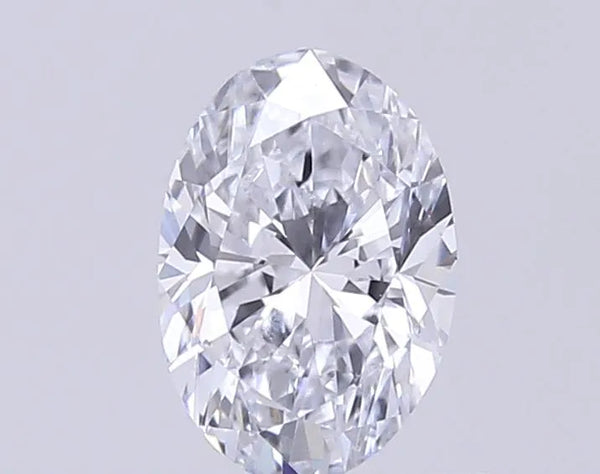
0.28ct Oval Lab Grown Diamond (Colour D, Clarity VS1, IGI Certified)
£75.00
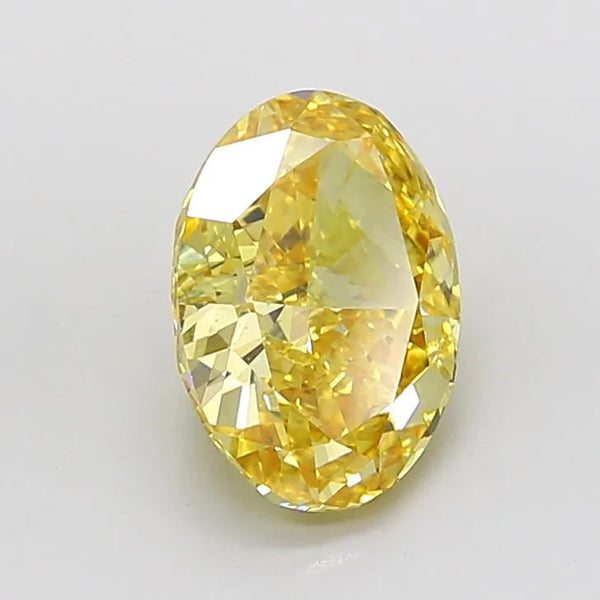
3.08ct Oval Lab Grown Diamond (Colour Fancy Vivid Yellow, Clarity VS1, IGI Certified)
£685.00
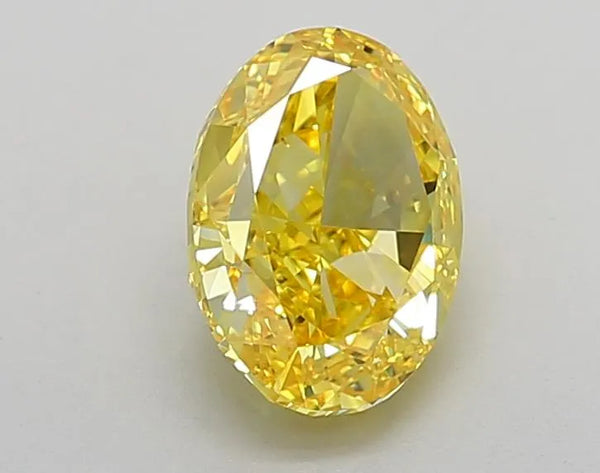
2.24ct Oval Lab Grown Diamond (Colour Fancy Vivid Yellow, Clarity VVS1, IGI Certified)
£704.00
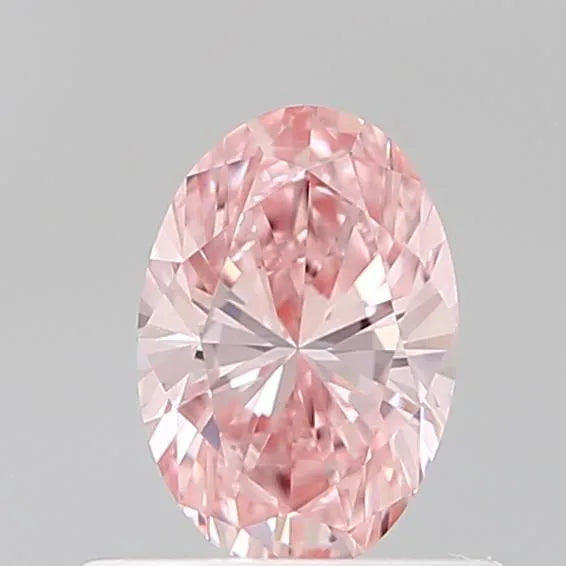
0.58ct Oval Lab Grown Diamond (Colour Fancy Vivid Pink, Clarity VS1, IGI Certified)
£161.00
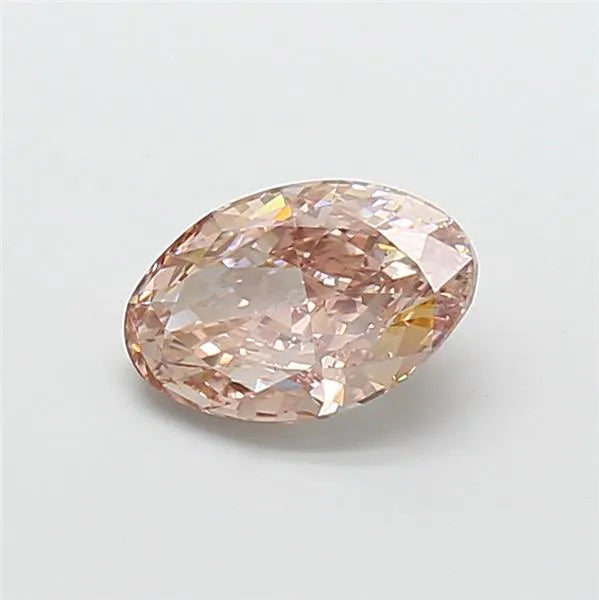
2.00ct Oval Lab Grown Diamond (Colour Fancy Light Pink Brown, Clarity VS1, IGI Certified)
£751.00
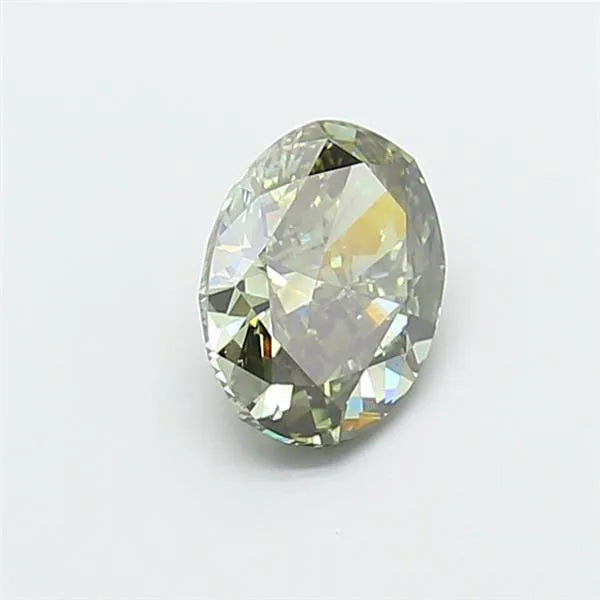
1.50ct Oval Lab Grown Diamond (Colour Fancy Vivid Green, Clarity VS2, IGI Certified)
£285.00
You might also like
Related collections and pages from President Jewellers
Loose & certified
Looking to pair it with a ring?
Every diamond on this page is loose — buy it on its own, set it into a ring of your own design, or pair it with one of our settings. Open any stone, click Set in a ring, and we’ll take you to your engagement, eternity or wedding band options.
Already have a setting in mind? Tap the menu icon and choose Engagement Rings › Ring Builder.
What our customers say
From your first question to your finished ring — our Hatton Garden specialists are here throughout. Crafted for your forever.
From your first question to your finished ring — our Hatton Garden specialists are here throughout. Crafted for your forever.