Pear Lab Grown Diamonds
What is a pear lab grown diamond?
A pear lab grown diamond is a polished stone cut to the classic teardrop outline — rounded at one end, tapering to a point — produced in a controlled laboratory environment rather than mined from the earth. The shape is also called a pear brilliant or teardrop cut, and it carries the same optical and chemical properties as its mined equivalent. Laboratory production uses either High Pressure High Temperature (HPHT) or Chemical Vapour Deposition (CVD) methods, both of which grow genuine diamond crystal. The result is a stone graded to identical standards: colour, clarity, cut and carat weight assessed in the same way by the same certifying bodies — GIA, IGI or HRD. Because laboratory growth removes the cost of mining, a pear lab grown diamond typically offers significantly greater carat weight or a higher colour and clarity grade at a comparable budget.
What makes the pear shape distinctive — and what should you look for?
The pear shape's defining characteristic is its asymmetry: one curved shoulder and one sharp apex, joined by two curved sides. This outline creates an elongating visual effect on the finger, making even a modest carat weight appear larger than an equivalent round or princess-cut stone. For pear lab grown diamonds, the ideal length-to-width ratio sits between 1.45:1 and 1.75:1 — ratios below this range look squat, while ratios above can appear too narrow for the weight. A well-cut pear should show even shoulders with no flat edges, and the point should be sharp rather than slightly blunted. One characteristic to assess is the bow-tie effect: a dark shadow across the centre of the stone that increases in visibility as cut quality falls. In a well-proportioned pear lab grown diamond, the bow-tie is minimal and does not dominate the face-up appearance. Each stone in this collection is certified, so the grading report documents the measurements needed to verify these proportions.
How much does a pear lab grown diamond cost in the UK?
Pear lab grown diamonds are priced primarily by carat weight, colour and clarity, with cut quality and certification body also influencing the figure. Compared with natural pear diamonds of identical grades, laboratory-grown stones cost considerably less per carat — a gap that widens at higher carat weights. For context, Bridebook's 2026 UK average engagement ring spend is £2,247; a pear lab grown diamond allows buyers to work comfortably within that figure while accessing grades — D-F colour, VS1-VS2 clarity, for instance — that would be significantly more expensive in a natural stone. Fancy shapes including the pear are sometimes priced slightly below rounds of the same grade because round-brilliant cutting is more wasteful of rough crystal, though this varies by individual stone. Viewing certified stones side by side in the widget below is the clearest way to compare value at different weight and grade combinations.
What happens when a pear lab grown diamond is set into a ring?
Selecting a pear lab grown diamond loose gives full control over the stone before committing to a setting. Once chosen, the stone can be set into any ring style from our Hatton Garden workshop. The process moves from consultation through CAD design to a silver or wax sample for a try-on appointment, then casting, setting, polishing and hallmarking at the London Assay Office. Lead time runs to 7-14 working days from order confirmation, depending on setting complexity. Because the pear shape has a vulnerable apex, the setting choice matters: a claw that wraps the point — a V-claw or split-prong — protects it during daily wear. Halo and solitaire settings both suit pear lab grown diamonds well, though a halo further amplifies the perceived size of the stone. Rings are resized free for life; custom orders are excluded from the standard 30-day return window.
Caring for a pear lab grown diamond
Pear lab grown diamonds share the hardness of all diamond — a 10 on the Mohs scale — so the facets resist scratching in normal wear. The primary vulnerability is the pointed tip, which can chip if struck at a certain angle, making protective claw placement important in any setting. Cleaning is straightforward: warm water, a drop of washing-up liquid and a soft brush remove the oils and residues that dull a stone's brilliance over time. Ultrasonic cleaners are generally safe for clean pear lab grown diamonds without surface-reaching inclusions, though a professional clean at the workshop each year keeps the setting secure as well as the stone bright. All rings carry a lifetime warranty, and the London Assay Office hallmark on every finished ring confirms the metal standard independently.
Frequently asked questions
Are pear lab grown diamonds real diamonds?
Yes. Pear lab grown diamonds are genuine diamond — the same carbon crystal structure, hardness and optical properties as mined stones. The difference is origin: grown in a laboratory rather than extracted from the earth. Every stone is certified by GIA, IGI or HRD, which grade lab grown diamonds to exactly the same standards as natural ones.
What length-to-width ratio suits a pear diamond?
A ratio between 1.45:1 and 1.75:1 is generally considered well-proportioned for a pear diamond. Within this range the shape reads clearly as a teardrop without appearing either too wide or too narrow. The grading certificate for each stone documents its measurements, making it straightforward to verify before purchase.
Do pear lab grown diamonds show a bow-tie effect?
Many pear-cut diamonds show some degree of bow-tie — a dark shadow across the widest part of the stone. Its severity depends on cut quality and depth proportions. A well-cut pear lab grown diamond will have a minimal bow-tie that does not dominate the face-up view. Reviewing the stone in video or in person helps assess this before committing.
Can I return a pear lab grown diamond if it is not right?
Loose pear lab grown diamonds carry a 30-day return period with no questions asked and no exclusions. Complimentary insured UK delivery is included. If the stone has already been set into a ring, the ring's 30-day return policy applies, with custom and bespoke orders excluded.
Which setting best protects the point of a pear diamond?
A V-claw or split-prong that wraps around the apex is the most reliable protection for the pointed tip of a pear diamond. Standard round claws placed at the point leave the tip partially exposed to impact. This detail is considered during the CAD design stage when setting a pear lab grown diamond into one of our rings.
How much does a 1 carat pear lab grown diamond cost in the UK?
A 1 carat pear lab grown diamond in the UK typically ranges from around £500 to £1,800 depending on colour, clarity and cut. A G colour, VS clarity 1ct pear lab grown commonly sits in the £750 to £1,200 band — versus £3,500 to £5,000 for an equivalent natural pear. The shape's strong rough yield combined with lab grown's production efficiency makes pear cuts particularly cost-effective in lab grown origin, especially at 1.5ct and above.
Does a pear lab grown diamond look bigger than a round of the same carat?
Yes. A pear lab grown diamond of the same carat weight as a round brilliant reads approximately 10-15 per cent larger face-up because the elongated outline spreads the visible surface across a longer dimension. A 1ct pear at a length-to-width ratio of 1.55 measures roughly 8.5mm × 5.5mm; a 1ct round measures roughly 6.5mm across. On the finger, the pear's length is the eye-catching dimension. For buyers prioritising scale per carat — and per budget — the pear shape is one of the most efficient choices in lab grown origin.
Featured pear lab grown diamonds
Hand-selected pieces from the President Jewellers catalogue
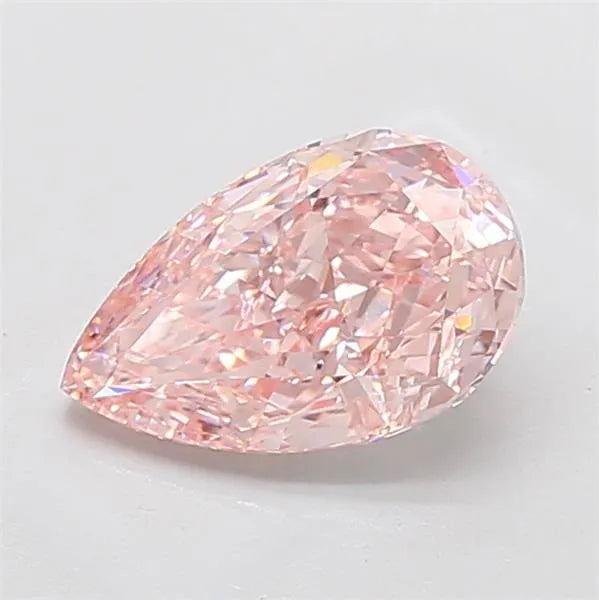
3.10ct Pear Lab Grown Diamond (Colour Fancy Intense Pink, Clarity VVS2, IGI Certified)
£928.00
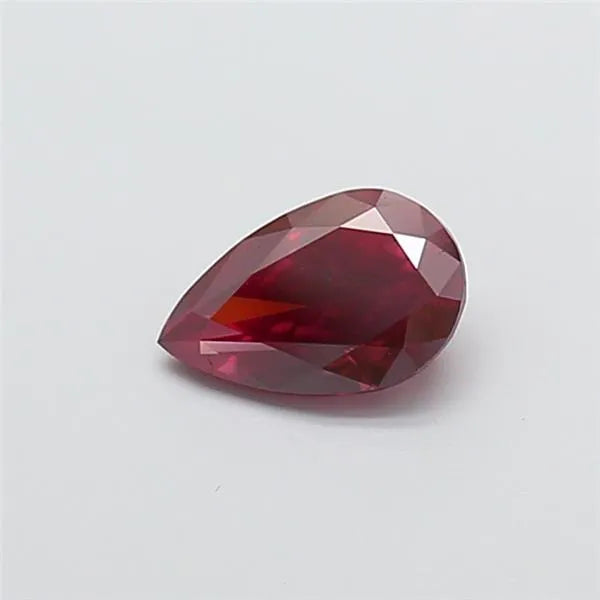
1.04ct Pear Lab Grown Diamond (Colour Fancy Deep Red, Clarity VVS2, IGI Certified)
£236.00
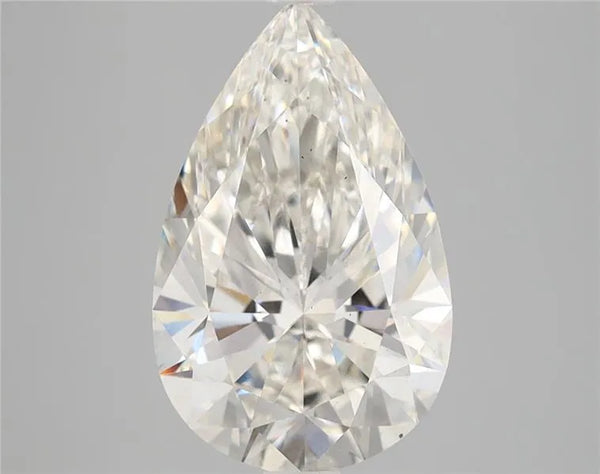
3.10ct Pear Lab Grown Diamond (Colour H, Clarity VS1, IGI Certified)
£450.00
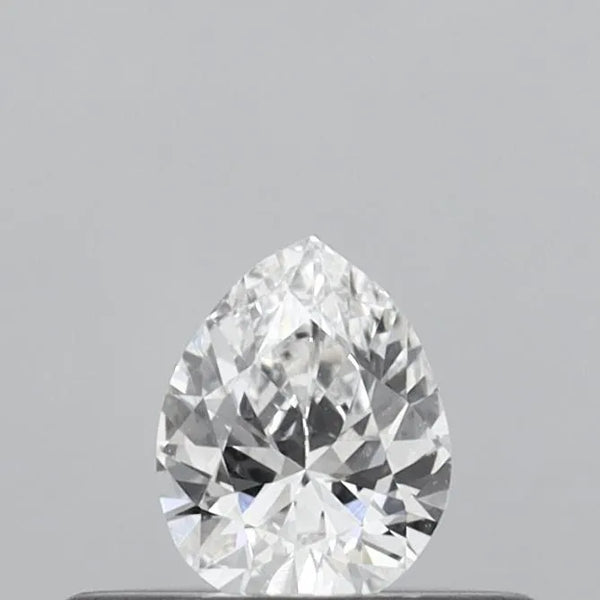
0.21ct Pear Lab Grown Diamond (Colour D, Clarity VS1, IGI Certified)
£64.00
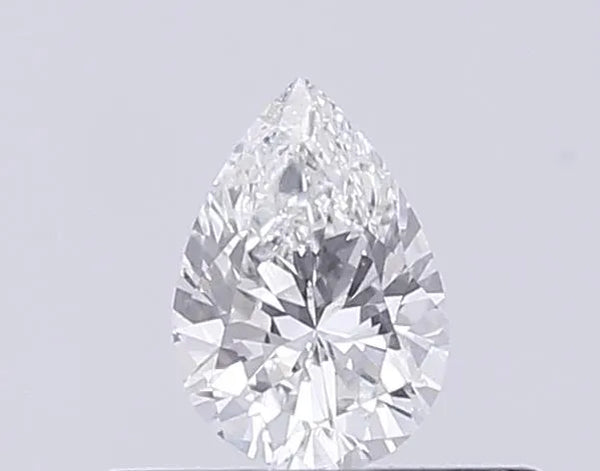
0.20ct Pear Lab Grown Diamond (Colour F, Clarity VVS1, IGI Certified)
£64.00
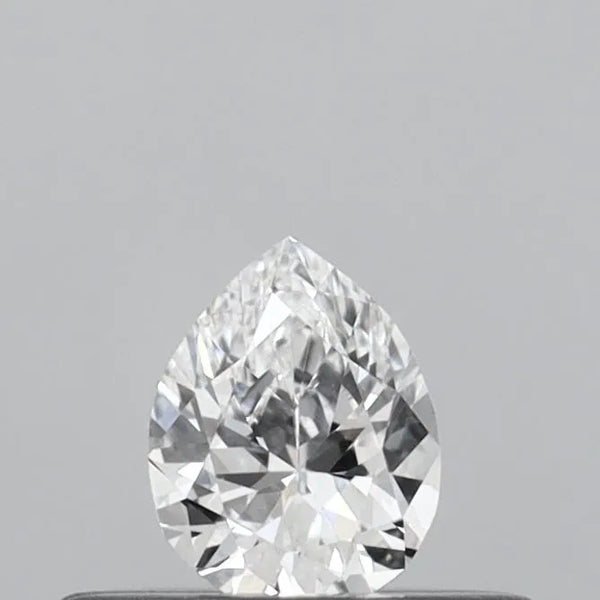
0.21ct Pear Lab Grown Diamond (Colour D, Clarity VS1, IGI Certified)
£64.00
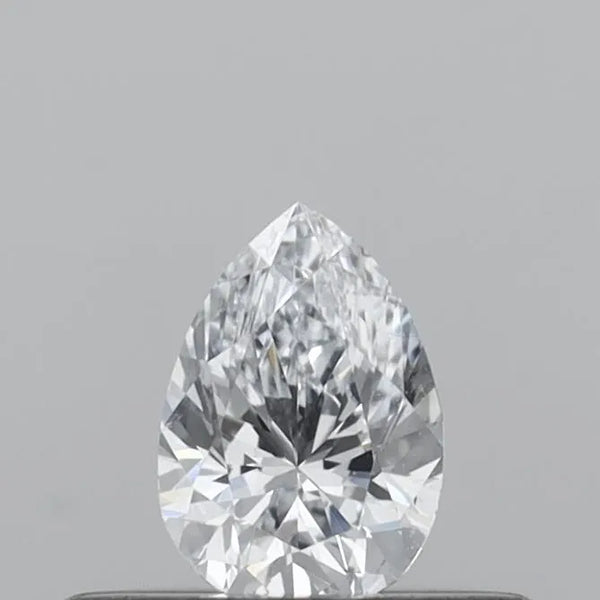
0.23ct Pear Lab Grown Diamond (Colour F, Clarity VS1, IGI Certified)
£66.00
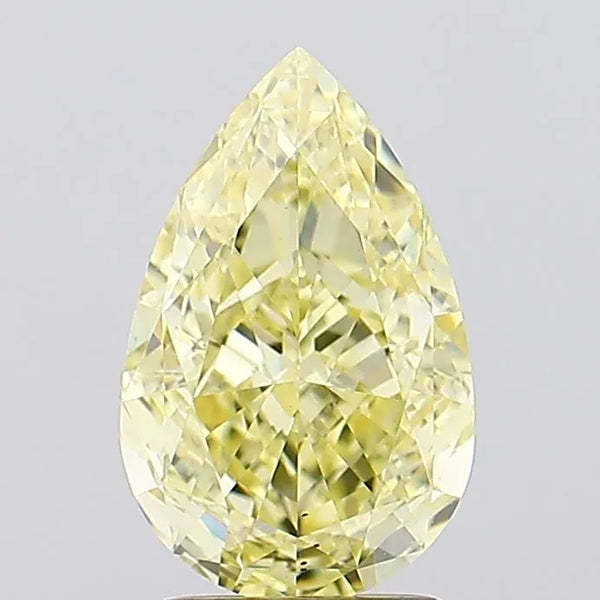
2.60ct Pear Lab Grown Diamond (Colour Fancy Vivid Yellow, Clarity VS1, IGI Certified)
£575.00
Loose & certified
Looking to pair it with a ring?
Every diamond on this page is loose — buy it on its own, set it into a ring of your own design, or pair it with one of our settings. Open any stone, click Set in a ring, and we’ll take you to your engagement, eternity or wedding band options.
Already have a setting in mind? Tap the menu icon and choose Engagement Rings › Ring Builder.