Platinum Halo Engagement Rings
What defines a platinum halo engagement ring?
A platinum halo engagement ring is distinguished by a frame of small accent diamonds encircling the centre stone, set entirely in 950 platinum — the densest and most durable precious metal used in fine jewellery. The halo's defining function is optical: by surrounding the centre stone with a continuous row of brilliance, it extends the perceived diameter of the focal stone. On a round centre stone, the halo creates a symmetrical corona of light; on an oval, pear, or cushion centre, it traces and amplifies the stone's outline. Platinum's contribution here is specific — its natural whiteness does not require rhodium plating (unlike white gold), so the metal remains a consistent, cool white over decades of wear. The prongs and claw tips holding each accent stone are formed from the same solid platinum, making the halo setting notably resistant to deformation. The result is a ring that reads as larger and brighter than its actual carat weight would suggest, while the structural integrity of platinum ensures the setting holds that appearance long-term.
Why choose platinum over white gold for a halo setting?
Platinum is the most practical metal for a halo setting because the setting contains the highest density of small, closely spaced stones in any ring style. Halo accent stones are typically 0.01ct to 0.03ct each, set in micro-claw or pavé formations with minimal metal between them. In this configuration, metal hardness and density matter: platinum, at approximately 950 parts per thousand pure metal, resists the micro-bending that can loosen individual accent stones over time. White gold in a halo ring requires periodic rhodium plating — every 12 to 18 months for most wearers — to maintain its white tone, and each replating session carries a small risk of obscuring fine detail in a complex halo setting. Platinum develops a natural patina that many wearers find preferable, and it can be repolished to a bright finish at any point without affecting metal volume, since platinum is worked rather than removed when polished. For those prioritising long-term structural security around the accent diamonds, platinum is the more considered choice.
How much does a platinum halo engagement ring cost in the UK?
The cost of a platinum halo engagement ring is shaped by four variables: the weight and grade of the centre stone, the total carat weight of the halo accent diamonds, the complexity of the setting, and the volume of platinum used in the mounting. A platinum halo setting typically uses more metal by weight than its white gold equivalent, which contributes to a higher base mounting cost. Centre stones from 0.5ct to 1.0ct, set with a single halo of accent diamonds, represent the most common configuration. Bridebook's 2026 UK average engagement ring spend of £2,247 offers a useful reference point, though platinum halo rings — given the metal premium and accent-stone costs — frequently sit above that figure, particularly once a certified natural diamond centre stone is specified. Lab-grown diamonds offer a route to a larger or higher-grade centre stone within the same overall budget, as they are typically priced at a significant discount to natural equivalents of the same specification.
What is the process for making a platinum halo ring to order?
Every platinum halo engagement ring at President Jewellers is made to order through a structured process beginning with a design consultation. Once the design is confirmed, our team produces a CAD model and then a silver or wax sample, which can be assessed in our Hatton Garden showroom by appointment. This try-on stage is particularly useful for halo rings, where the outer diameter of the halo relative to finger width significantly affects the overall impression. After sample approval, the ring is cast in platinum, the centre stone and halo accent diamonds are set by hand, and the finished piece is submitted to the London Assay Office for hallmarking. The typical lead time is 7 to 14 working days from order confirmation — straightforward single-halo designs sit toward the shorter end, while double-halo or bespoke shoulder configurations require closer to the full fortnight. Free, insured UK delivery is included, and every platinum halo ring carries a lifetime warranty.
What centre stone shapes work well in a platinum halo setting?
Platinum halo settings are compatible with a wide range of centre stone shapes, and the metal's neutral tone flatters all of them equally — unlike yellow gold, which casts a warm reflection into the lower facets of a colourless diamond. Round brilliant diamonds are the most common pairing, and a round halo remains the clearest expression of the setting's symmetry. Oval and cushion cuts suit a halo particularly well because both shapes carry slightly lower face-up brightness than a round brilliant, and the encircling accent diamonds compensate by adding perimeter light return. Elongated shapes — oval, pear, and marquise — work with both round and shape-matched halos; a shape-matched halo traces the outline precisely, while a round halo creates deliberate contrast. Emerald and Asscher cuts, with their open, step-cut faceting, produce a more architectural look inside a halo frame, and the platinum setting's clean white tone keeps the focus on the interplay between the rectangular step facets and the brilliant accent stones surrounding them.
Frequently asked questions
Are platinum halo engagement rings more expensive than white gold?
Yes, typically. Platinum is denser than white gold, so a platinum mounting uses more metal by weight for the same design. The metal premium for platinum over 18ct white gold can add several hundred pounds to the mounting cost alone. However, platinum requires no rhodium replating over its lifetime, which reduces ongoing maintenance costs compared to a white gold halo ring.
Will the platinum show scratches around the halo accent diamonds?
Platinum develops a surface patina — a soft matte quality — with wear rather than losing metal through scratching. Unlike gold, which removes small amounts of metal when scratched, platinum displaces material. The patina is considered desirable by many wearers, and the ring can be repolished to a bright finish at any point. The halo accent stones themselves are protected by the raised claw settings.
Can I choose a coloured gemstone as the centre stone in a platinum halo ring?
Yes. Platinum halo settings are available with diamond, fancy-colour diamond, or gemstone centre stones. Sapphire, ruby, and emerald are popular choices in a platinum halo frame, as the metal's cool white tone provides a neutral contrast to both warm and cool gemstone colours without the competing tint that yellow or rose gold introduces.
How do I maintain the halo accent diamonds over time?
Platinum halo rings should be cleaned at home using a soft brush, warm water, and mild washing-up liquid — applied gently around the halo accent stones to remove oil and soap build-up. A professional clean and stone check every 12 to 18 months is advisable for any halo setting, given the density of small stones. President Jewellers provides a lifetime warranty and can inspect the setting at any point.
How long does it take to make a platinum halo ring?
The standard lead time is 7 to 14 working days from order confirmation. A single-halo design with a round or oval centre stone typically completes toward the shorter end of that range. More intricate configurations — double halos, bespoke shoulder pavé, or unusually large centre stones requiring custom claw heights — may require the full 14 working days.
How much does a platinum halo engagement ring cost in the UK?
A platinum halo engagement ring in the UK typically ranges from around £2,800 to £15,000 depending on centre-stone specification, halo carat weight, and design complexity. A platinum halo setting with a 0.5ct G/VS round centre diamond and a single halo of ~0.20ct total accent weight commonly sits in the £3,000 to £4,500 band with GIA, IGI or HRD certification. Moving to a 1ct centre stone extends to £7,000 to £12,000. The platinum premium over an 18ct white gold halo setting is typically £400 to £800 on the mounting alone — meaningful but offset by zero rhodium re-plating costs over the ring's lifetime.
Why is 950 platinum particularly suited to halo accent diamonds?
The halo style sets more small diamonds in close proximity than any other engagement ring configuration — typically 16 to 24 accent stones at 0.01ct to 0.03ct each, held by micro-claws or grain settings with minimal metal between them. In this dense configuration, metal hardness matters significantly. 950 platinum (95% pure platinum, 5% alloy) is denser and more resistant to micro-bending than 18ct white gold (75% gold, 25% palladium/silver), which means the fine claws holding each accent stone retain their grip more reliably over decades of wear. Platinum also doesn't require rhodium re-plating — unlike white gold, where every replating session carries a small risk of obscuring fine detail in the halo. For these reasons, platinum is considered the most practical metal choice for halo settings specifically.
Featured platinum halo engagement rings
Hand-selected pieces from the President Jewellers catalogue
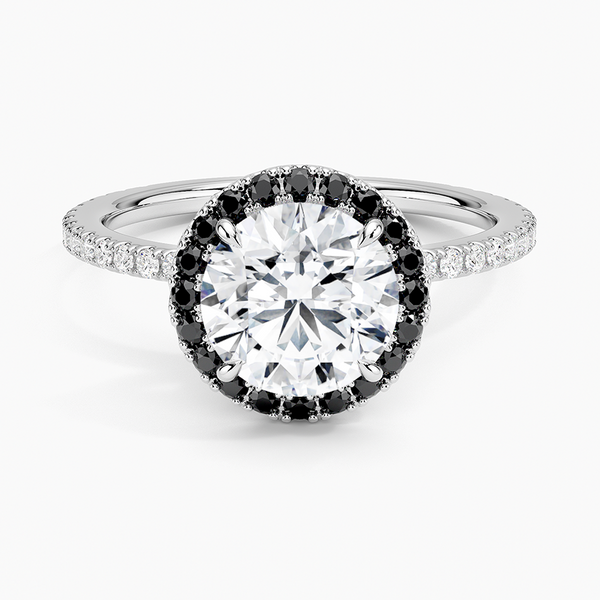
Waverly Halo Diamond Ring with Black Diamond Accents Engagement Ring
£1,614.20
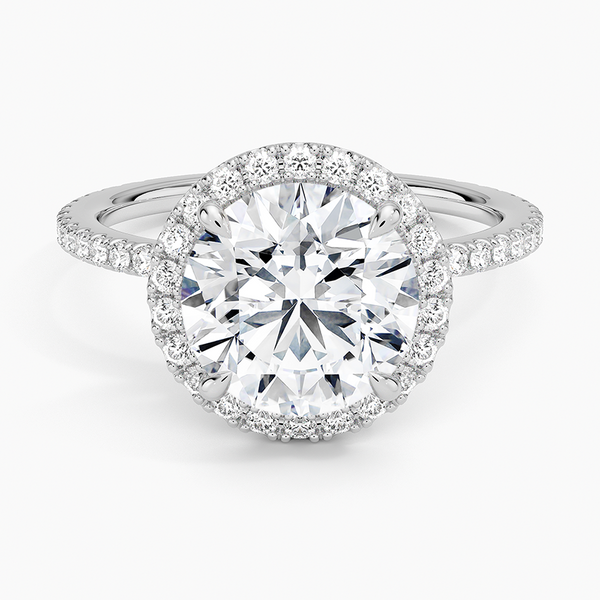
Waverly Halo Diamond Engagement Ring
£1,679.72
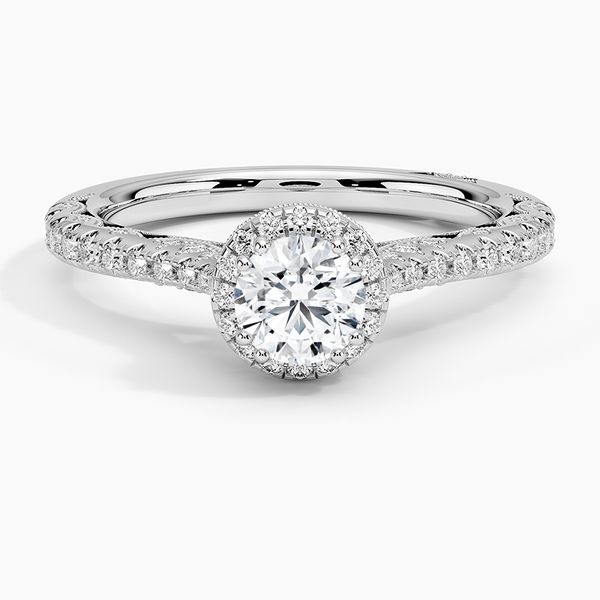
Tacori Petite Crescent Bloom Diamond Engagement Ring
£5,740.14
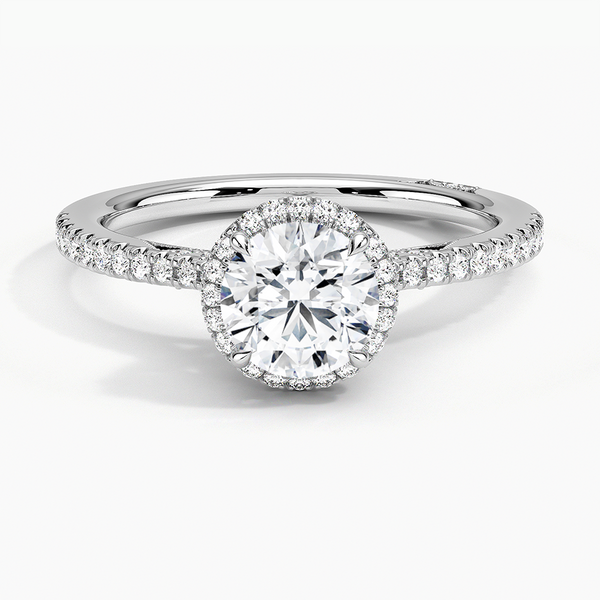
Simply Tacori Cathedral Drape Diamond Engagement Ring
£3,180.13
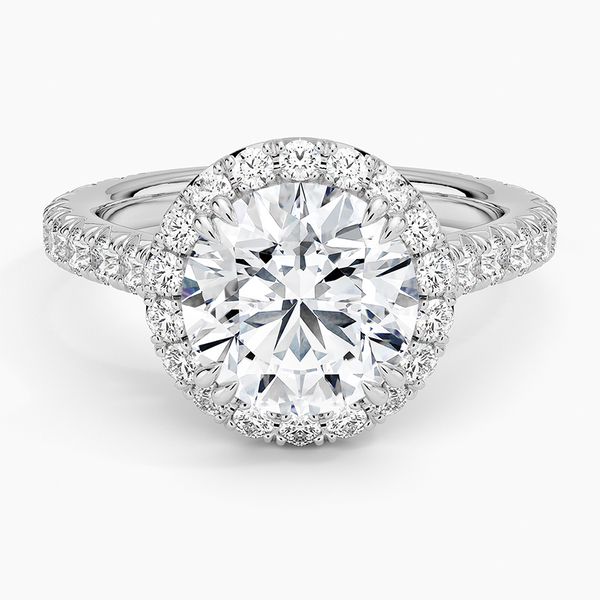
Sienna Halo Three-Quarter Coverage Diamond Engagement Ring
£2,230.09
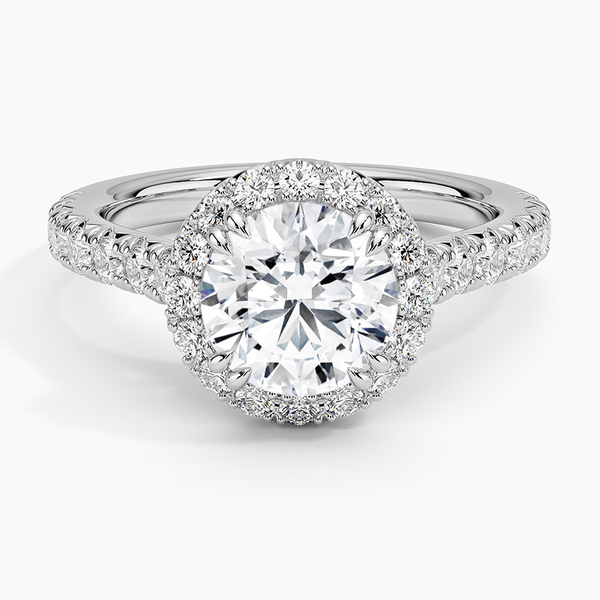
Sienna Halo Half Coverage Diamond Engagement Ring
£2,203.88
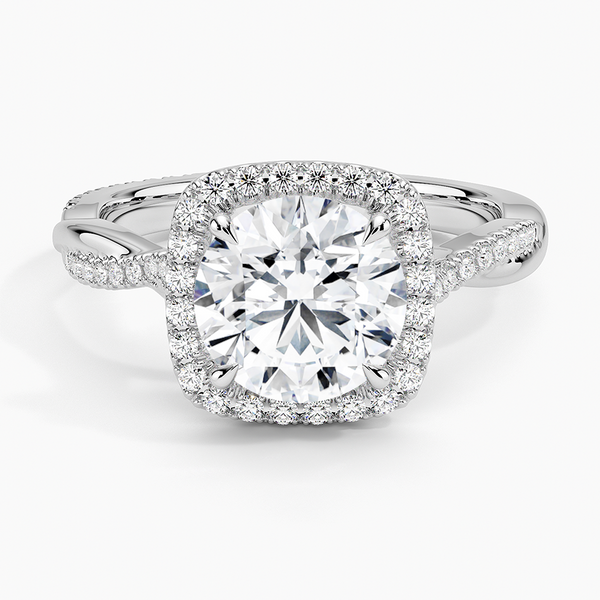
Petite Twisted Vine Halo Diamond Engagement Ring
£1,745.24
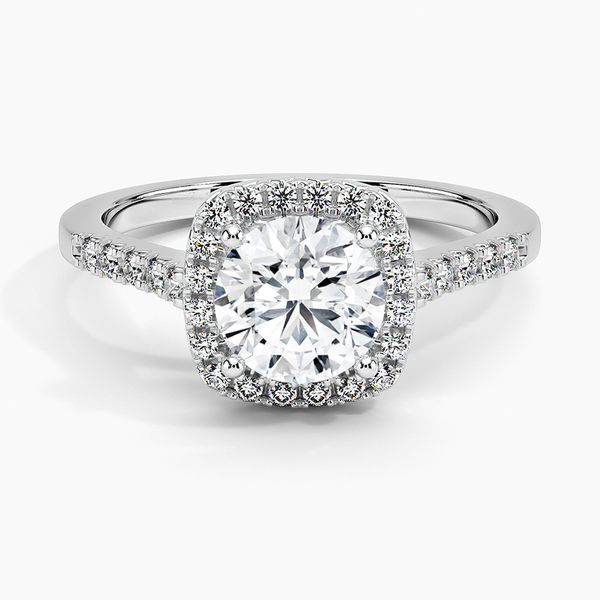
Odessa Halo Diamond Engagement Ring
£1,417.64
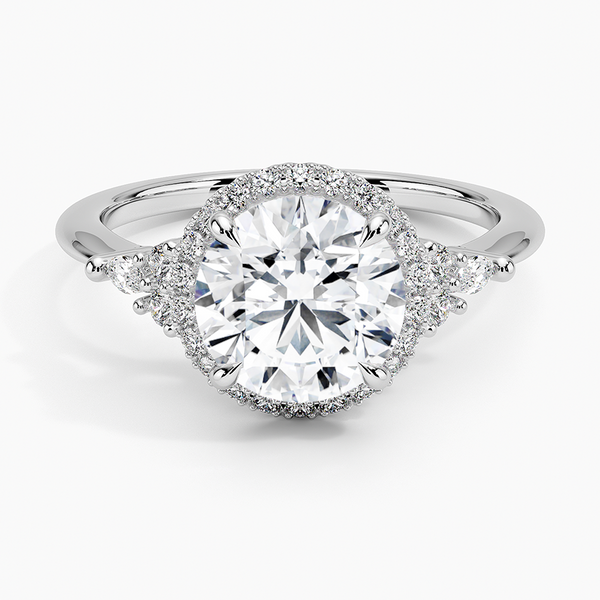
Nadia Halo Diamond Engagement Ring
£1,614.20
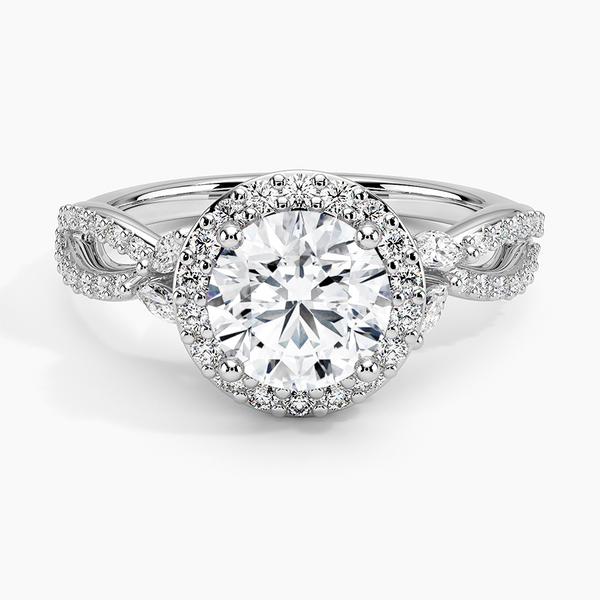
Luxe Willow Halo Diamond Engagement Ring
£1,836.97
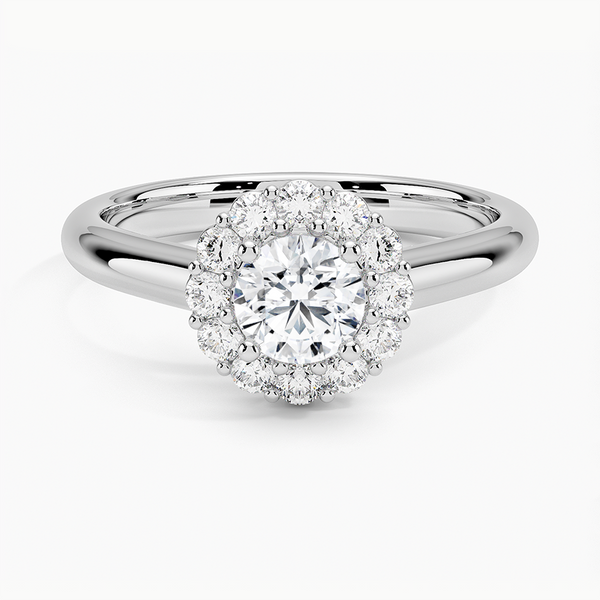
Lotus Flower Halo Diamond Engagement Ring
£1,483.16
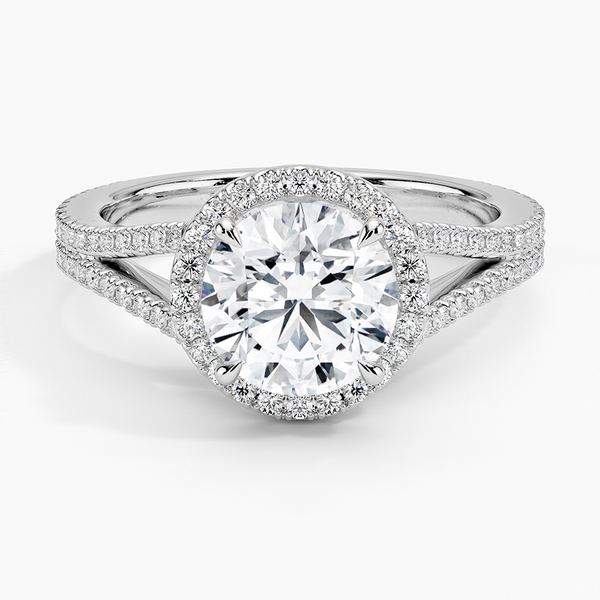
Fortuna Halo Diamond Engagement Ring
£2,334.92
Designing your ring
Designed online. Made by hand.
The convenience of online design.
-
Visualise it
Detailed CADs from every angle, so you see exactly what we’ll cast.
-
Try before we cast
Free ring sizers and a silver or wax sample to confirm the fit and feel before casting.
-
Hand-finished in London
Cast and finished in our London workshop, fully hallmarked and ready in 7–14 working days.
-
Risk-free
Every stone certified. Free refunds within 30 days (21 working) — no questions asked.
Three steps to your ring
-
1
Choose your starting point
-
2
Pair the two
-
3
We craft & deliver