Rose Gold Solitaire Engagement Rings
What defines a rose gold solitaire engagement ring?
A rose gold solitaire engagement ring is defined by a single centre stone raised on a plain or lightly detailed band in rose gold — a copper-alloyed gold that carries a distinctly warm, pinkish hue. The combination is intentional: the solitaire setting exists to foreground the stone, and rose gold's warm tonal range flatters a broad spectrum of diamond grades and gemstone types, drawing warmth from stones that might read cooler in white metal. Unlike styles that layer additional stones around a centre gem, the rose gold solitaire relies on proportion and metalwork alone to create its effect. The band profile — whether knife-edge, flat, or gently rounded — becomes expressive precisely because there is nothing else competing for attention. This restraint is why the rose gold solitaire has remained a consistent choice among those who want the ring's character to emerge from quality of craft rather than volume of material.
Which centre stone suits a rose gold solitaire setting?
Almost any centre stone works in a rose gold solitaire, but the interaction between stone and metal is worth considering carefully. Round brilliant diamonds deliver maximum light return regardless of metal, but set in rose gold the warmth of the alloy can make a near-colourless stone appear slightly warmer — this is rarely a drawback and is often preferred. For buyers choosing a natural diamond on a given budget, a stone in the G–J colour range set in rose gold will often look very similar to a higher-colour stone set in platinum. Oval, pear, and cushion cuts also sit particularly well in rose gold solitaires: their softer outlines echo the warmth of the metal. For gemstone centres — sapphires, morganites, rubies, or spinels — rose gold creates a complementary tonal relationship that white metal does not. Lab-grown diamonds offer the same visual result as natural stones when set into a rose gold solitaire, and both are certified to GIA, HRD, or IGI standards.
What does a rose gold solitaire engagement ring cost in the UK?
The cost of a rose gold solitaire engagement ring is driven by three variables: the carat weight and quality grade of the centre stone, the gold karat of the band, and any bespoke details in the setting. Rose gold is available from us in 9ct, 14ct, and 18ct — a higher karat means more gold by weight, a deeper and slightly richer colour tone, and a correspondingly higher metal cost. Bridebook's 2026 UK average engagement ring spend of £2,247 reflects buying across all metal types and settings; a rose gold solitaire can be configured meaningfully below or well above that figure depending on stone choice and carat weight. Lab-grown diamonds offer a practical route to a larger or higher-graded stone within a set budget while maintaining the same rose gold solitaire form. Natural diamonds at the same specification carry a higher per-carat price; long-term resale considerations may factor into that choice.
How long does a made-to-order rose gold solitaire ring take?
A rose gold solitaire engagement ring is made to order in our Hatton Garden workshop, typically within 7–14 working days from order confirmation. The process begins with a CAD design based on the chosen setting profile, stone shape, and band specification. A silver or wax sample is then produced so the ring can be tried on at our Hatton Garden showroom by appointment before any precious metal is cast — a step that is particularly useful when choosing a solitaire setting, because band width and claw profile are most clearly understood in three dimensions. Once the sample is approved, the ring is cast in rose gold, the stone is set, the surface is finished, and the completed ring is hallmarked at the London Assay Office. A simple four-claw or six-claw solitaire typically sits toward the shorter end of the lead time; a more detailed bezel-edge or tension-set profile may require the full 14 working days.
Caring for and wearing a rose gold solitaire ring day to day
Rose gold is formed by alloying gold with copper, and that copper content gives the metal both its characteristic colour and a slight hardness advantage over yellow gold at the same karat. In a rose gold solitaire where the band is unadorned or lightly profiled, daily wear resistance is generally good. Over time, rose gold develops a subtle patina from the copper — it deepens and softens slightly in tone, which many wearers consider a characteristic rather than a flaw. If a consistent polish is preferred, a professional clean will restore it. Claws on a solitaire setting, regardless of metal, should be checked periodically to ensure the stone remains secure; our lifetime warranty and free resizing cover the ring throughout ownership. To protect both the rose gold band and the centre stone, removal during heavy manual work, swimming, or contact with abrasive surfaces is advisable.
Frequently asked questions
Are rose gold solitaire engagement rings available in the UK?
Yes. Rose gold solitaire engagement rings are crafted to order in our Hatton Garden, London workshop in 9ct, 14ct, and 18ct rose gold, with a choice of centre stone — diamond, fancy-colour diamond, or gemstone. Every ring is hallmarked at the London Assay Office and delivered with complimentary insured UK delivery within 7–14 working days from order confirmation.
Does rose gold suit all diamond colour grades?
Rose gold works particularly well with diamonds in the G–J colour range, as the metal's warm tone complements rather than contrasts a slightly warmer stone. Very high-colour diamonds (D–F) are not diminished by rose gold, but their colourlessness is sometimes better accentuated in platinum or white gold. For a rose gold solitaire, near-colourless grades often represent the most considered balance of quality and value.
What is the difference between 9ct, 14ct, and 18ct rose gold?
The karat figure indicates the proportion of pure gold in the alloy. 18ct rose gold is 75% gold, 14ct is 58.3%, and 9ct is 37.5%. The copper proportion, which delivers the rose tone, increases at lower karats — so 9ct rose gold tends to appear slightly deeper in colour. 18ct is softer and considered the premium standard for fine jewellery; 9ct and 14ct are harder wearing and more affordable.
Can a gemstone be set as the centre stone in a rose gold solitaire?
Yes. Sapphires, rubies, spinels, morganites, and other gemstones can all be set as the centre stone in a rose gold solitaire. The tonal warmth of rose gold pairs particularly well with pink and peachy-hued gemstones such as morganite or padparadscha sapphire, and creates a strong contrast with deep blue or navy sapphire. Hardness and durability are assessed stone by stone at consultation.
Is a rose gold solitaire ring eligible for free resizing?
Yes. Every ring made in our Hatton Garden workshop carries free resizing for life, including rose gold solitaires. As rose gold's copper content can make certain very high-karat alloys slightly more reactive to repeated heat cycles, resizing is carried out by our workshop specialists to ensure the colour and surface finish remain consistent throughout the process.
Featured rose gold solitaire engagement rings
Hand-selected pieces from the President Jewellers catalogue

Simply Tacori Delicate Drape Diamond Engagement Ring
£2,197.33
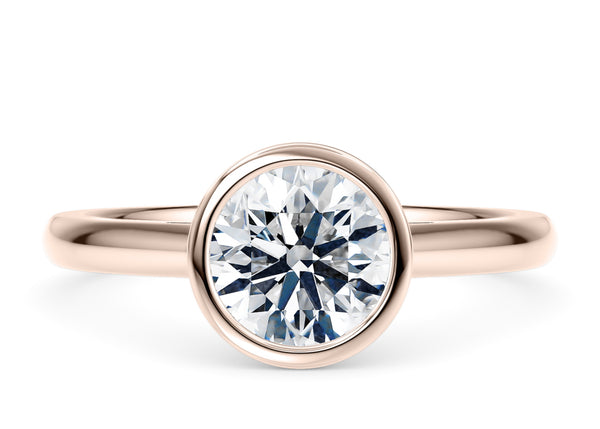
Luna Solitaire Engagement Ring
£1,117.56
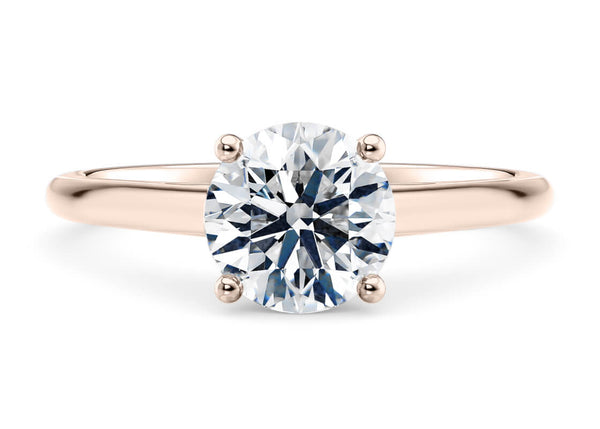
Estella Solitaire Engagement Ring
£1,066.15
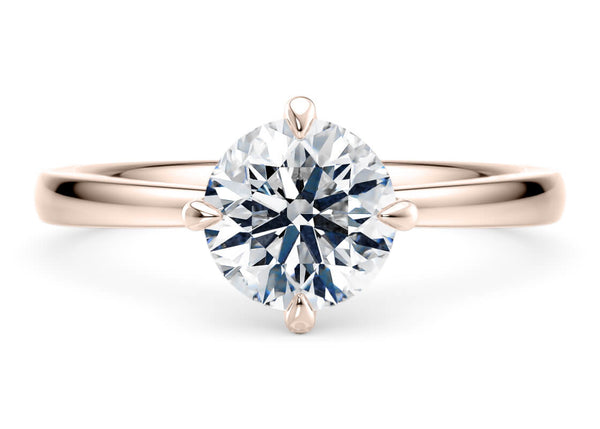
Starlight Compass Solitaire Engagement Ring
£1,196.70
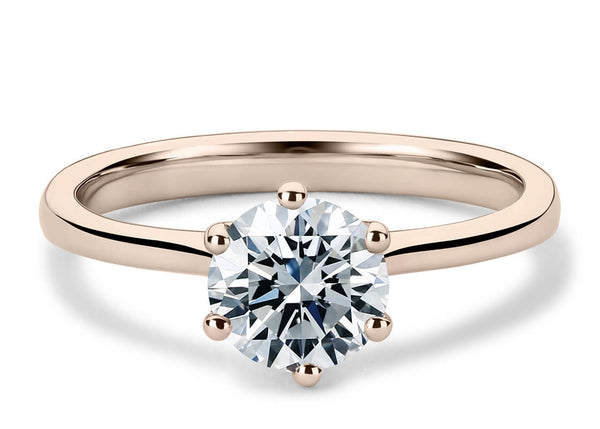
Principessa Solitaire Engagement Ring
£1,229.03

Iris Solitaire Engagement Ring
£1,282.91
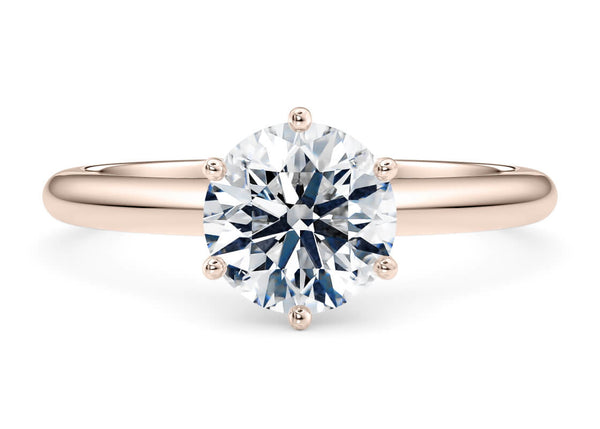
Allure Solitaire Engagement Ring
£1,340.63
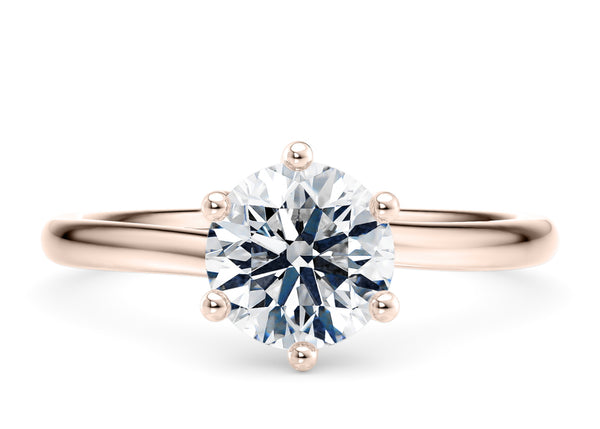
Zeta Solitaire Engagement Ring
£1,241.80
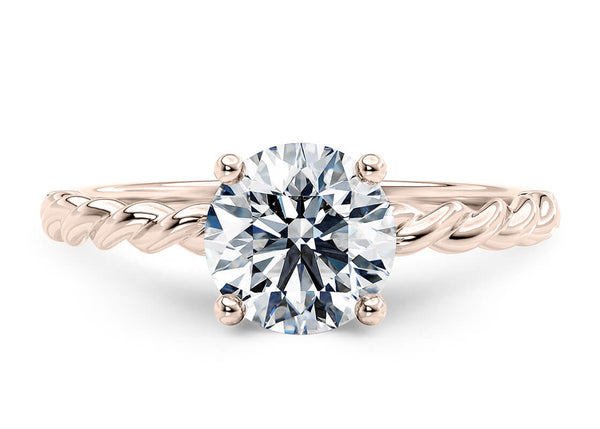
Ascot Solitaire Engagement Ring
£1,047.34
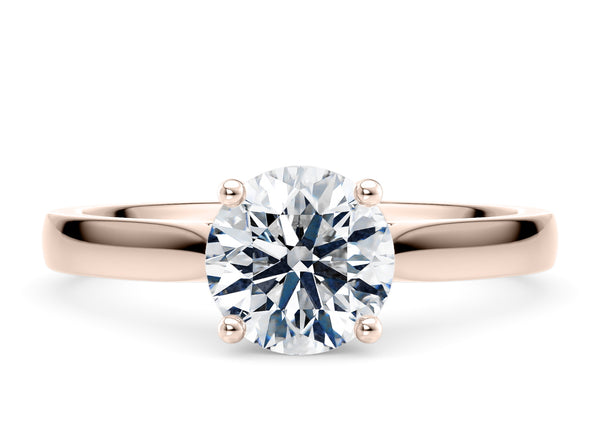
Contour Solitaire Engagement Ring
£1,192.10
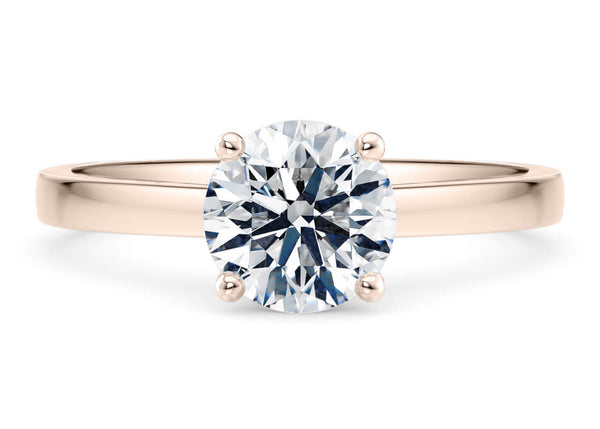
1477 Classic Solitaire Engagement Ring
£1,394.25

Hanover Solitaire Engagement Ring
£1,174.48
Designing your ring
Designed online. Made by hand.
The convenience of online design.
-
Visualise it
Detailed CADs from every angle, so you see exactly what we’ll cast.
-
Try before we cast
Free ring sizers and a silver or wax sample to confirm the fit and feel before casting.
-
Hand-finished in London
Cast and finished in our London workshop, fully hallmarked and ready in 7–14 working days.
-
Risk-free
Every stone certified. Free refunds within 30 days (21 working) — no questions asked.
Three steps to your ring
-
1
Choose your starting point
-
2
Pair the two
-
3
We craft & deliver