Bezel Engagement Rings
What is a bezel engagement ring?
A bezel engagement ring is a setting where a thin band of metal surrounds the entire perimeter of the centre stone, holding it in place without prongs. The rim sits flush with the stone's girdle and presents a single, clean outline. This construction differs from a prong setting in two ways. First, the stone is fully encircled rather than gripped at four or six points, which protects the edges from knocks and keeps the girdle from chipping. Second, the ring sits noticeably lower on the finger, so the bezel rests under gloves, sleeves and gym wraps without catching. Bezels suit wearers in active jobs — surgeons, nurses, climbers, hairdressers — and anyone who finds prongs catch on jumpers.
How to choose a stone and metal for a bezel setting
For a bezel engagement ring, pick a stone shape with a clean, regular outline — round, oval, emerald and cushion all bezel cleanly, while pear and marquise need a careful rim profile to keep the points crisp. Because the metal rim covers the girdle and a fraction of the crown, a bezel reads visually slightly smaller than the same carat weight in a prong setting, so many clients size up by 0.1ct to 0.2ct to compensate. Metal choice matters more here than with prongs: the rim sits against the stone in direct view, so white metals (platinum, 18ct white gold) recede against a colourless diamond, while yellow and rose gold deliberately warm the stone. For fancy-colour diamonds and gemstones, a matched-tone bezel intensifies the colour. We offer bezels in platinum or gold across 9ct, 14ct and 18ct.
What does a bezel engagement ring cost in the UK?
A bezel engagement ring's price is driven mostly by the centre stone — carat, colour, clarity and cut for diamonds; species, origin and saturation for gemstones — with the bezel setting itself adding a modest premium over a basic four-prong solitaire because more metal is used and the rim requires precise fitting to the stone. As a reference point, Bridebook's 2026 UK average engagement ring spend is £2,247. Within that budget a bezel-set 0.5ct certified diamond in 14ct gold is achievable; moving to 1ct, to platinum, or to a high-saturation sapphire or emerald centre shifts the figure upward. Lab-grown diamonds let the same budget reach a larger or higher-spec stone; natural diamonds hold long-term resale better. Both are certified by GIA, HRD or IGI.
How long does a made-to-order bezel ring take?
A made-to-order bezel engagement ring takes 7 to 14 working days from order confirmation, depending on the complexity of the design. The process begins with a consultation, followed by CAD design of the bezel profile around your chosen stone. We then produce a silver or wax sample for try-on at the Hatton Garden showroom, which matters for bezels because the rim height and finger fit are decisions best made in the hand rather than on screen. Once approved, the ring is cast, the stone is set into the bezel collar, the rim is finished and polished, then sent to the London Assay Office for hallmarking. Insured UK delivery is complimentary. A plain platinum bezel solitaire sits at the shorter end of the window; a milgrain or half-bezel with side detail sits nearer 14 days.
Wearing and caring for a bezel ring
Bezel engagement rings are among the most practical settings for daily wear. The rim shields the stone's girdle from impact, the low profile clears keyboards and steering wheels, and the absence of prongs means no points to bend or wear thin. Cleaning is straightforward — warm water, mild soap, a soft brush around the rim edge where the metal meets the stone. Pairing with a wedding band is simple too: a flat or low-profile court band sits flush against a bezel without a gap, and a shaped band is rarely needed. We offer free resizing for life and a lifetime warranty on every ring, with 30-day returns on non-bespoke orders.
Frequently asked questions
Are bezel engagement rings good for active lifestyles?
Yes. The continuous metal rim protects the centre stone's girdle from knocks, the low profile keeps the ring from catching on gloves, sleeves and sports equipment, and there are no prongs to bend or snag. Bezel settings are routinely chosen by surgeons, nurses, climbers, musicians and anyone working with their hands.
Does a bezel make a diamond look smaller?
Slightly. Because the rim covers the girdle and a small fraction of the crown, a bezel-set stone reads marginally smaller than the same carat weight in a prong setting. Most clients who want the prong-equivalent visual size step up by around 0.1ct to 0.2ct, or choose a half-bezel that leaves the crown more open.
Can any diamond shape be bezel set?
Most shapes bezel well. Round, oval, emerald, cushion and Asscher all suit a full bezel cleanly. Pear and marquise can be bezel set but need a carefully shaped rim to protect and frame the points. Princess cuts require a reinforced corner profile to guard the sharp angles from chipping.
What metals work best for a bezel ring?
Platinum and 18ct white gold give a neutral rim that recedes against a colourless diamond and lets the stone lead. Yellow and rose gold deliberately warm the stone and suit champagne, yellow and pink diamonds as well as warm-toned gemstones. We craft bezel engagement rings in platinum and in 9ct, 14ct and 18ct gold.
Can a bezel ring be resized later?
Yes. A bezel setting can be resized like most rings, and we offer free resizing for life on every ring crafted in our Hatton Garden workshop. The bezel rim itself is not disturbed during resizing — adjustments are made to the shank, so the stone and its surround stay intact.
How much does a bezel engagement ring cost in the UK?
A bezel engagement ring's price is driven mostly by the centre stone, with the bezel setting itself adding a modest premium over a four-prong solitaire — typically 10-20 per cent for the extra metal and the precision fit required around the girdle. As a working reference: a bezel-set 0.5ct certified diamond at G colour, VS clarity in 14ct gold sits in the £1,800 to £2,800 band; moving to a 1ct centre in platinum extends to £6,000 to £10,000 depending on grade. A half-bezel (covering only top and bottom of the girdle) costs marginally less than a full bezel and shows more of the stone's crown — a useful compromise for buyers who want the security of a rim with maximum face-up size.
Why are bezel rings recommended for surgeons and active jobs?
Bezel engagement rings are routinely chosen by surgeons, nurses, climbers, hairdressers, musicians and anyone working extensively with their hands because of three practical advantages over prong settings. First, the continuous metal rim shields the diamond's girdle from impact — a knock that would chip a prong-set stone is absorbed by the rim instead. Second, the absence of exposed prongs means no points to bend, snag on gloves, or catch on fabric and sports equipment. Third, the low profile sits flush against the finger, fitting under surgical gloves and gym wraps without pressure points. For buyers in those professions or with active hobbies, a bezel setting often outperforms more elaborate styles for everyday durability.
Featured bezel engagement rings
Hand-selected pieces from the President Jewellers catalogue
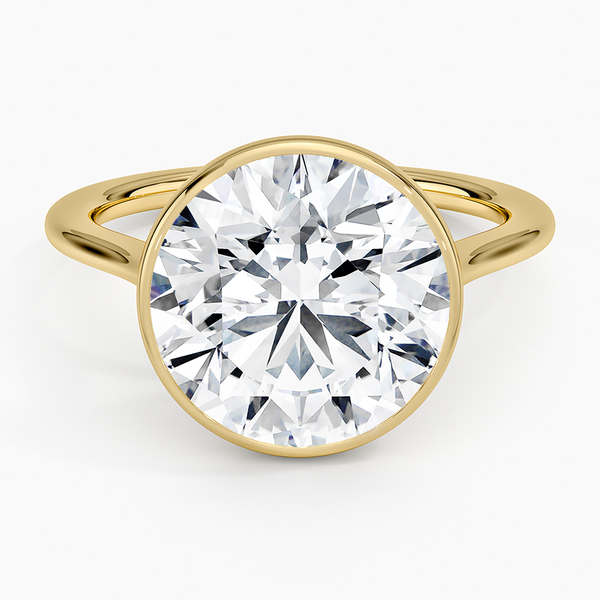
Petite Luna Bezel Engagement Ring
£1,006.32
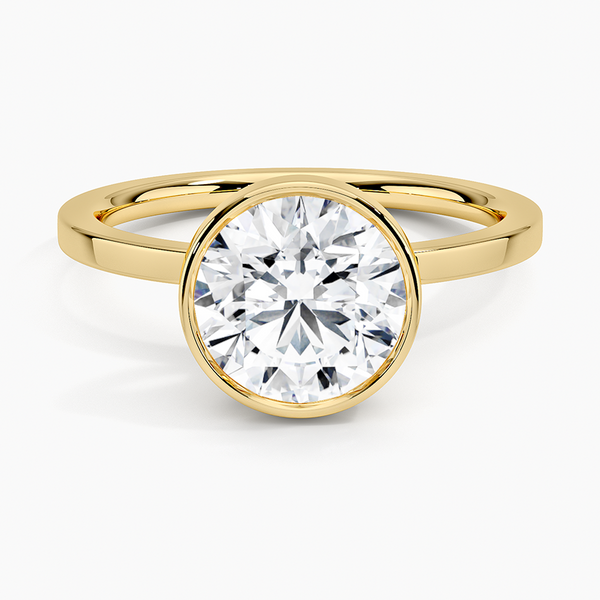
Noemi Bezel Engagement Ring
£1,050.73
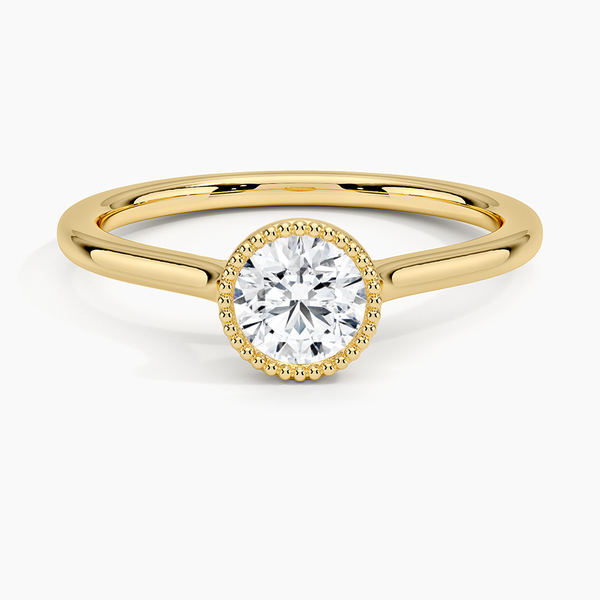
Margot Bezel Engagement Ring
£1,116.25
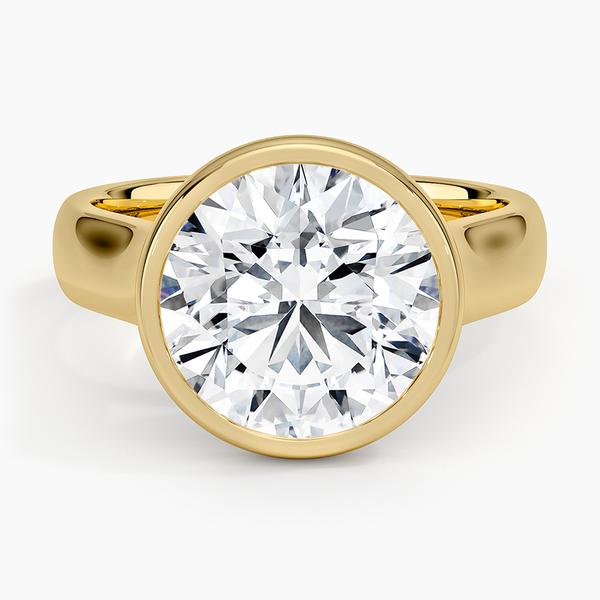
Luna Bezel Engagement Ring
£1,443.85
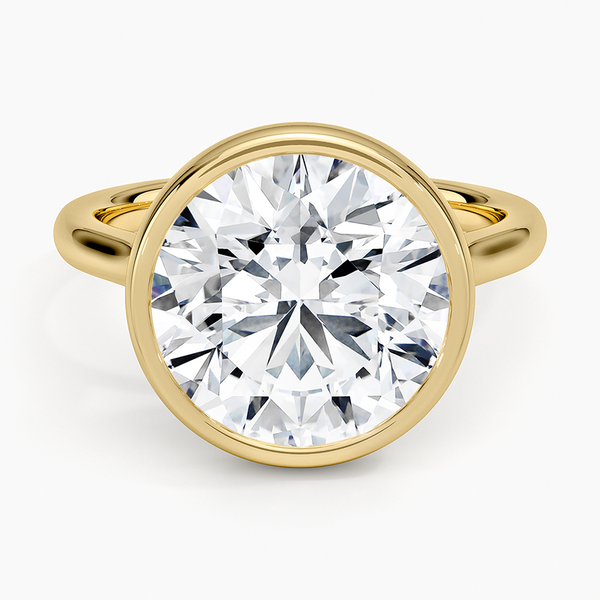
Luna Bezel Engagement Ring
£1,079.12
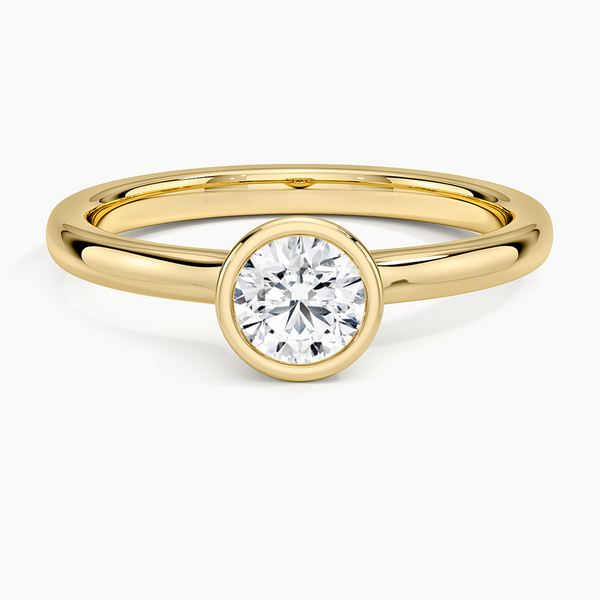
Sylvie Bezel Solitaire Engagement Ring
£1,378.33
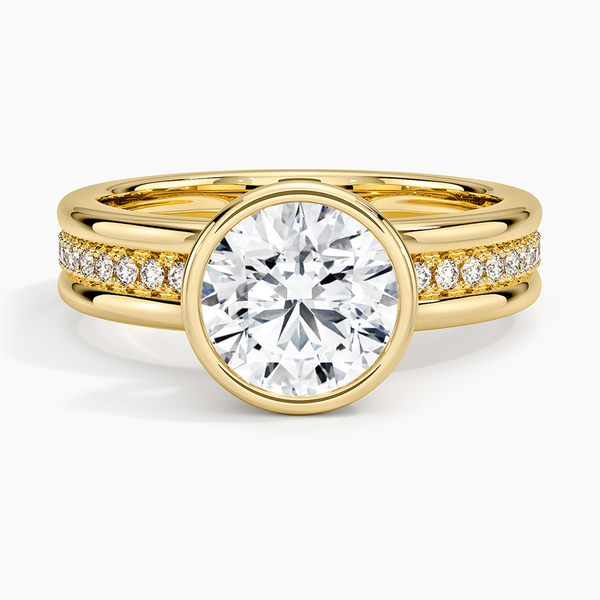
Sofia Triple Band Diamond Engagement Ring
£1,941.80
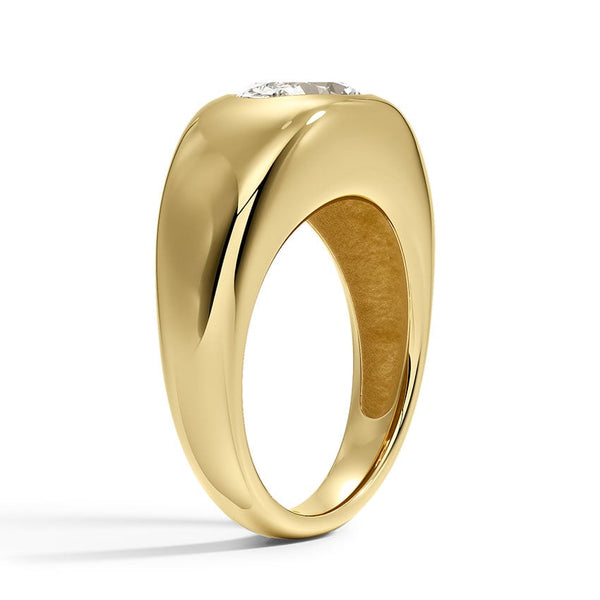
Sloane Flush Set Solitaire Dome Engagement Ring
£2,728.04
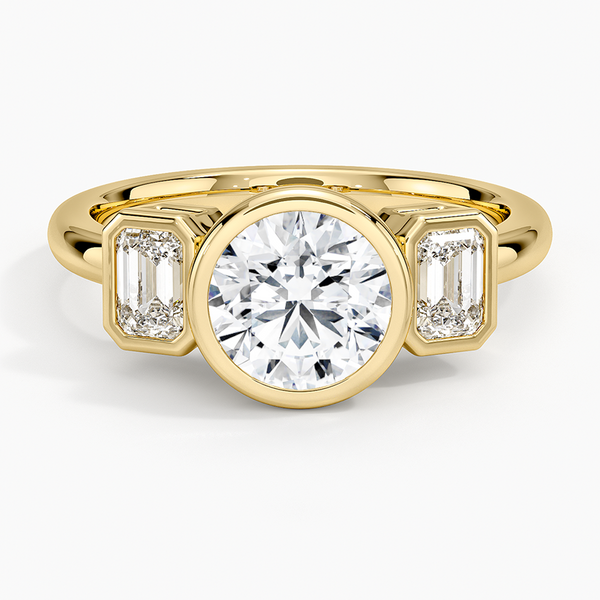
Rhiannon Bezel Three Stone Diamond Engagement Ring
£2,361.13
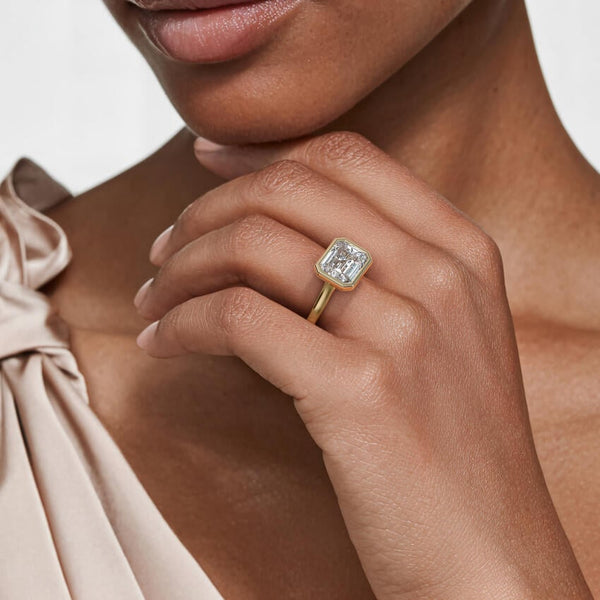
Luna East-West Bezel Solitaire Engagement Ring
£1,116.25
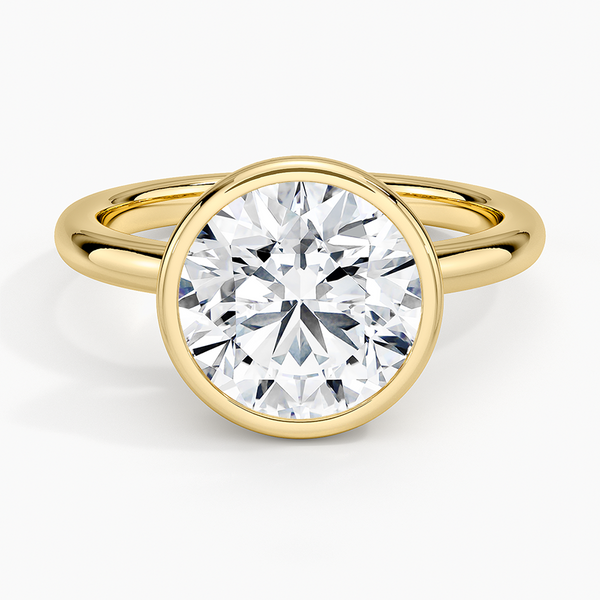
Julietta Bezel Solitaire Engagement Ring
£1,155.56
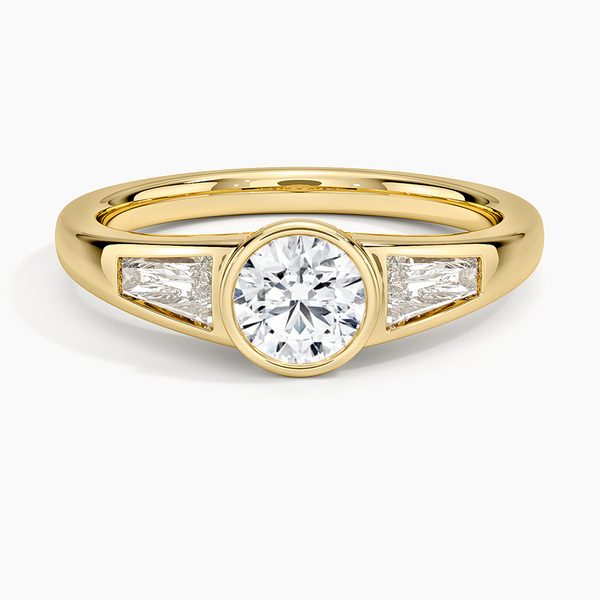
Hayes Three Stone Baguette Diamond Engagement Ring
£2,662.52
Designing your ring
Designed online. Made by hand.
The convenience of online design.
-
Visualise it
Detailed CADs from every angle, so you see exactly what we’ll cast.
-
Try before we cast
Free ring sizers and a silver or wax sample to confirm the fit and feel before casting.
-
Hand-finished in London
Cast and finished in our London workshop, fully hallmarked and ready in 7–14 working days.
-
Risk-free
Every stone certified. Free refunds within 30 days (21 working) — no questions asked.
Three steps to your ring
-
1
Choose your starting point
-
2
Pair the two
-
3
We craft & deliver