Cathedral Engagement Rings
What is a cathedral engagement ring?
A cathedral engagement ring is distinguished by two arched struts of metal that sweep upward from the shank, flanking the centre stone and holding it at a heightened position — much like the vaulted arches of a cathedral nave. This raised architecture is the defining feature of the style, and it separates cathedral settings from flush or low-profile mounts. The arches serve both a structural and visual purpose: they anchor the stone securely while drawing the eye upward, making the centre stone appear more prominent. Cathedral settings pair naturally with round brilliant, oval, and cushion-cut stones, where the arched profile complements a curved girdle. Sharply cornered shapes such as princess or emerald cuts can also sit in cathedral mounts, though the setting is designed with slightly squarer arch geometry in those cases to avoid stress on the corners. The style became widely recognised in the mid-twentieth century and remains a consistently chosen silhouette for those who prefer an elevated, architectural look over a low, hugging mount.
How to choose the right stone and metal for a cathedral ring
The raised position of a cathedral setting means the centre stone is displayed prominently, so clarity and cut quality are particularly visible — a well-cut stone benefits from the elevated vantage point. For diamond cathedral rings, a round brilliant or oval cut is well suited, as the arches frame a curved outline cleanly. Coloured gemstones — sapphire, ruby, emerald — also suit the cathedral silhouette, and the height of the mount keeps the stone clear of the band for better light return. On metal choice, platinum or 18ct white gold complement near-colourless or fancy-colour blue and pink diamonds by providing a neutral surround. Rose gold in 9ct, 14ct or 18ct lifts warmer stones — morganite, cognac diamond, yellow sapphire — and adds warmth to the arches themselves. Yellow gold cathedral settings were the dominant choice through the mid-twentieth century and remain a deliberate, considered option. Because the arches extend above the finger line, the setting's profile is worth considering for active wearers — the raised centre stone sits higher than a bezel or low solitaire mount.
What does a cathedral engagement ring cost in the UK?
The cost of a cathedral engagement ring in the UK depends primarily on the centre stone — its carat weight, cut, colour, and clarity — with the setting metalwork contributing a smaller portion of the total. Bridebook's 2026 UK average engagement ring spend of £2,247 provides a useful reference point, and cathedral settings at that budget comfortably accommodate a certified round brilliant diamond of 0.5ct to 0.75ct in 18ct gold or platinum. Lab-grown diamonds offer the same graded specifications as natural stones — certified by GIA, IGI, or HRD — and allow a larger carat weight at the same spend. The arched metal architecture of a cathedral setting involves more handwork than a simple solitaire shank, which is reflected modestly in the setting cost, but the difference is rarely the dominant budget variable. Coloured gemstone centres — sapphire, ruby, emerald — can shift the overall cost considerably depending on origin and treatment status.
How long does a made-to-order cathedral ring take?
A cathedral engagement ring ordered through President Jewellers follows a precise process: consultation, CAD design, silver or wax sample for try-on at the Hatton Garden showroom, casting, setting, finishing, polishing, and London Assay Office hallmarking. From order confirmation, lead time is 7 to 14 working days, with straightforward cathedral solitaires typically falling toward the shorter end and cathedral pavé or more intricate arch detailing toward the longer. The wax or silver sample stage is integral — the elevated arch of a cathedral setting is best assessed in hand to confirm the height suits the wearer's daily routine before the final metal is cast. Rings are delivered by insured courier at no additional charge.
Caring for a cathedral setting over time
The arched profile of a cathedral engagement ring sits higher from the finger than low-profile mounts, which means the arches and the area beneath the centre stone can accumulate residue from lotions, soap, and general wear. A soft brush with mild soapy water every few weeks keeps the arches and the underside of the stone clear. Because the stone is elevated, it is more exposed than in a bezel-set ring, so periodic checks of the prongs or claws that hold the stone within the cathedral arch are advisable — President Jewellers includes a lifetime warranty on every ring, covering structural integrity, and free resizing for life. Platinum cathedral settings develop a natural patina over years; this can be repolished at service intervals. Gold cathedral rings in 9ct, 14ct, or 18ct retain their finish well, with 18ct being the most resistant to surface wear among the gold options.
Frequently asked questions
What makes a cathedral engagement ring different from a solitaire?
A solitaire describes the number of stones — one — while cathedral describes the setting architecture. A cathedral ring has arched metal struts rising from the band to elevate the centre stone. Many solitaires use a cathedral mount, but a cathedral setting can also hold multiple stones. The defining characteristic is the arch, not the stone count.
Is a cathedral setting suitable for everyday wear?
Cathedral settings are durable and well-suited to daily wear, though the raised profile means the centre stone sits higher than in a bezel or low solitaire. Wearers with very active hands may prefer a lower mount. The arches are solid structural elements and do not compromise security — all President Jewellers rings carry a lifetime warranty and are checked before despatch.
Which diamond shapes work best in a cathedral setting?
Round brilliant and oval cuts are the most natural pairing for cathedral settings, as the curved arches echo the rounded girdle. Cushion cuts also sit well within the arch profile. Princess and emerald cuts can be set in cathedral mounts with adjusted arch geometry to protect the corners. The elevated position of the stone suits any shape with good depth and cut quality.
Can I choose a coloured gemstone centre stone in a cathedral ring?
Coloured gemstones — including sapphire, ruby, emerald, and morganite — are available as centre stones in cathedral settings. The elevated mount benefits coloured stones by allowing light to enter from below, which improves saturation and depth of colour. Metal choice has a particular influence: white metals keep the colour reading true, while rose or yellow gold warms the overall presentation.
How do I try on a cathedral setting before committing to the final ring?
President Jewellers produces a silver or wax sample of the cathedral ring before casting in the final metal. Try-ons are by appointment at the Hatton Garden workshop, allowing the height and arch profile to be assessed in person. This step is especially useful for cathedral settings, where the raised mount is best evaluated by feel and proportion before the ring is completed.
Featured cathedral engagement rings
Hand-selected pieces from the President Jewellers catalogue
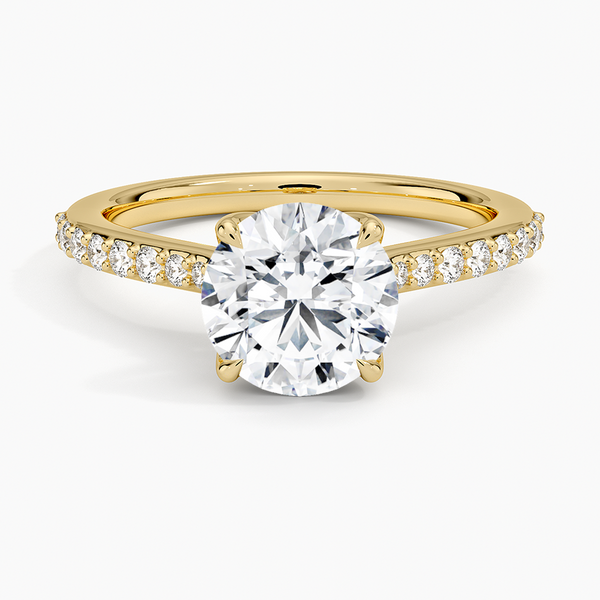
Elodie Cathedral Diamond Engagement Ring
£1,247.29
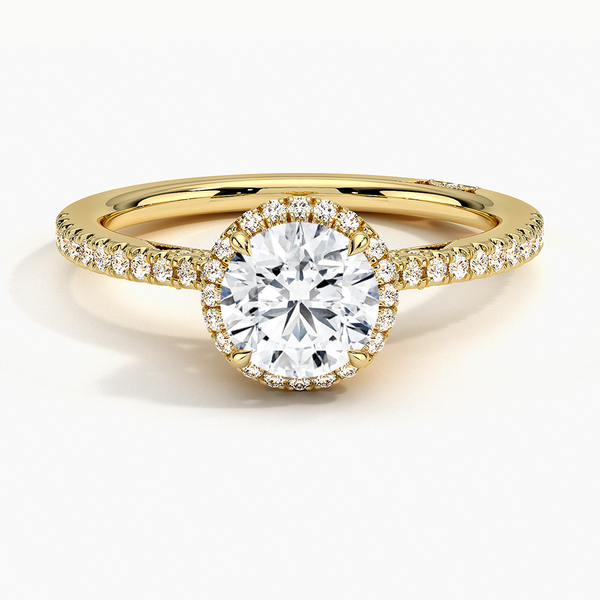
Simply Tacori Cathedral Drape Diamond Engagement Ring
£3,180.13
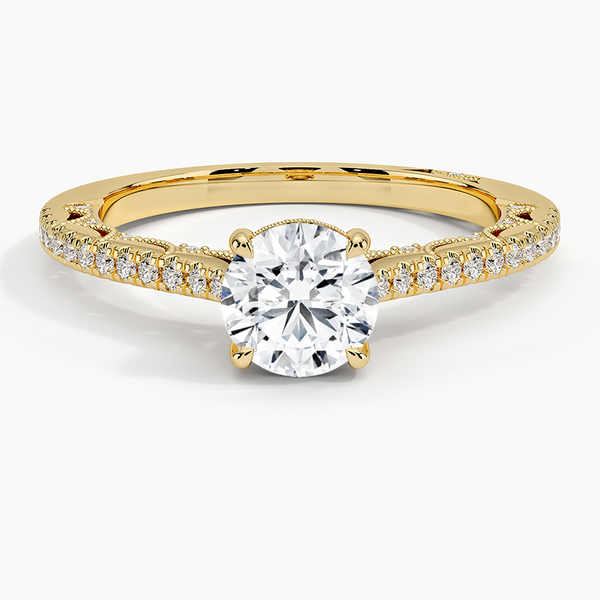
Tacori Lunetta Crescent Cathedral Diamond Engagement Ring
£3,736.32
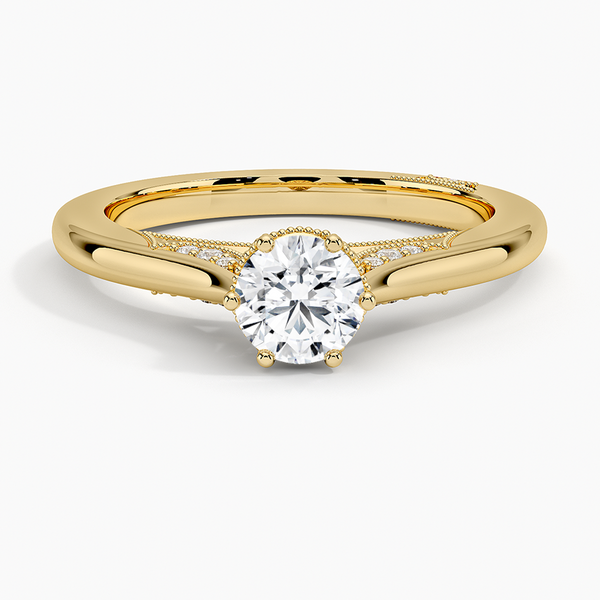
Simply Tacori Crown Diamond Engagement Ring
£2,590.45

Simply Tacori Cathedral Diamond Engagement Ring
£3,954.72
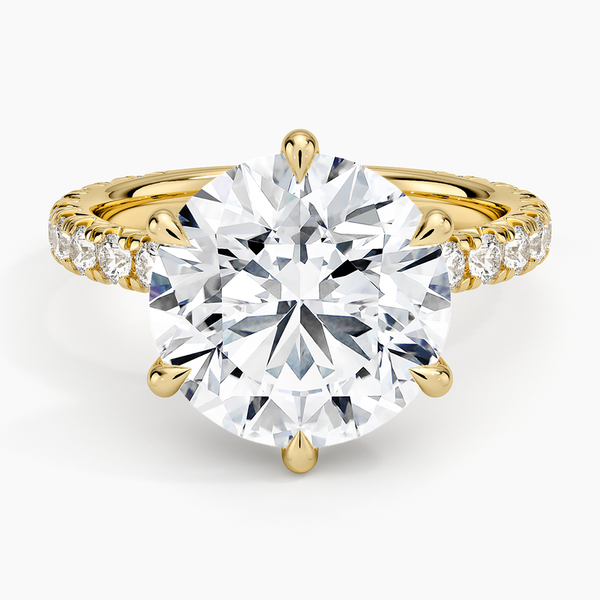
Sienna Three-Quarter Coverage Diamond Engagement Ring
£1,836.97

Sienna Half Coverage Diamond Engagement Ring
£1,378.33
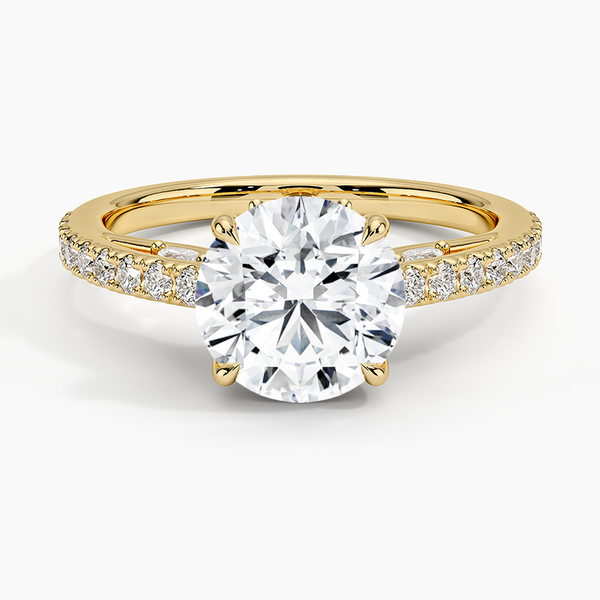
Secret Garden Adorned Gallery Diamond Engagement Ring
£2,138.36

Piper Knife Edge Solitaire Engagement Ring
£1,181.77
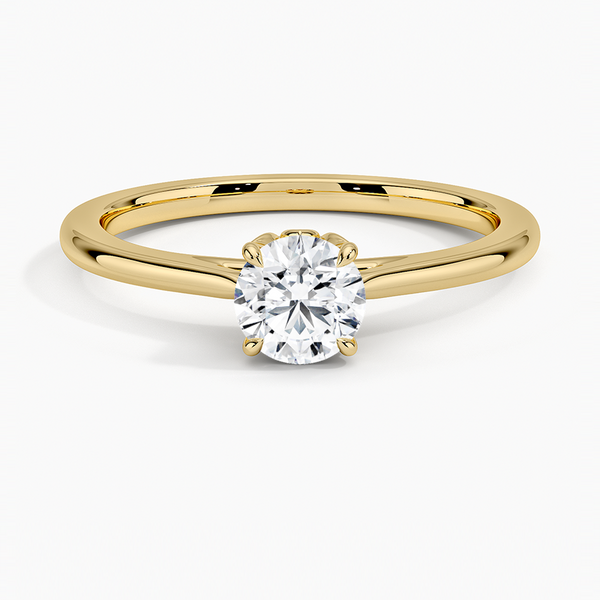
Petal Solitaire Tapered Engagement Ring
£1,116.25
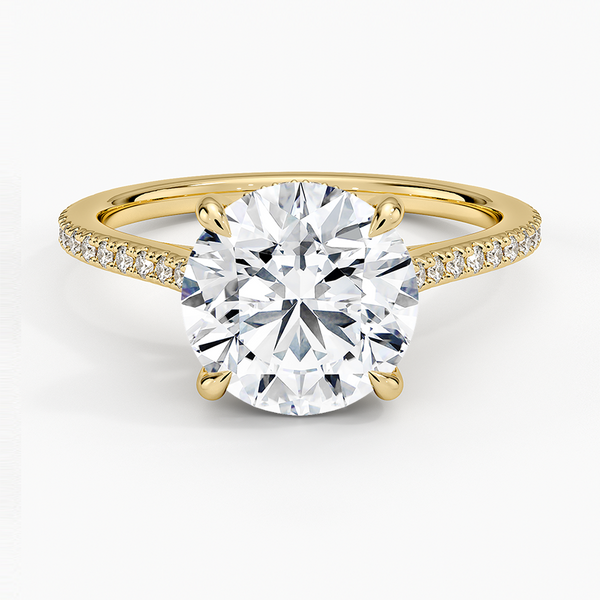
Luxe Lissome Diamond Engagement Ring
£1,443.85
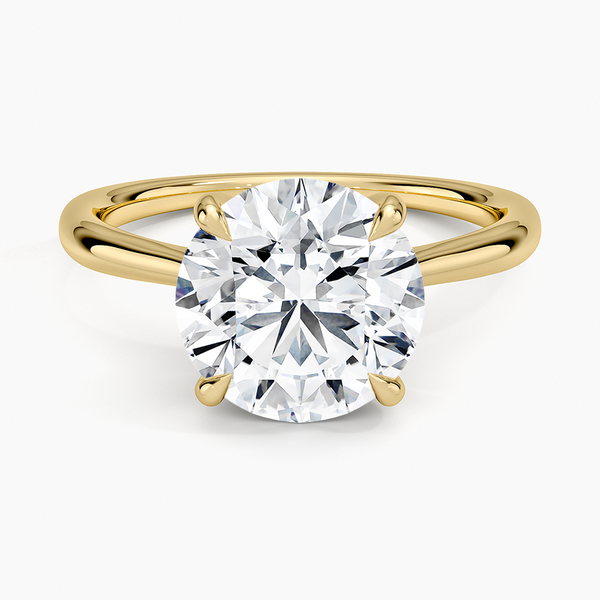
Freesia Cathedral Solitaire Engagement Ring
£1,116.25
Designing your ring
Designed online. Made by hand.
The convenience of online design.
-
Visualise it
Detailed CADs from every angle, so you see exactly what we’ll cast.
-
Try before we cast
Free ring sizers and a silver or wax sample to confirm the fit and feel before casting.
-
Hand-finished in London
Cast and finished in our London workshop, fully hallmarked and ready in 7–14 working days.
-
Risk-free
Every stone certified. Free refunds within 30 days (21 working) — no questions asked.
Three steps to your ring
-
1
Choose your starting point
-
2
Pair the two
-
3
We craft & deliver