Emerald Cut Lab Grown Diamonds
What defines an emerald cut lab grown diamond?
An emerald cut lab grown diamond is a rectangular step-cut stone with cropped corners, long parallel facets running the length of the table, and a characteristically open, hall-of-mirrors appearance. Unlike brilliant cuts, which scatter light into sparkle, the emerald cut holds light in broad flashes and deep reflections — a quality that rewards high clarity grades. Laboratory growth produces these stones under controlled thermal or chemical conditions that replicate the high-pressure environment of natural diamond formation. The resulting crystals are then cut and polished to the same specifications as mined emerald cuts, with the same characteristic length-to-width ratio typically sitting between 1.30 and 1.50.
Why choose an emerald cut for a lab grown diamond?
The emerald cut's large, open table makes it one of the most transparent shapes available — inclusions and colour tints are more visible here than in brilliant cuts, which makes the consistency of laboratory growth a genuine advantage. Lab grown diamonds tend to reach higher clarity grades at lower relative cost than comparable mined stones, and the emerald cut rewards that clarity directly. The shape also reads larger face-up than its carat weight suggests; a 1.0ct emerald cut typically measures around 6.5 mm × 4.5 mm, offering generous visual coverage. For those drawn to the architectural, rectilinear lines of Art Deco design, the emerald cut lab grown diamond is a natural fit.
What clarity and colour grade should an emerald cut lab grown diamond be?
For an emerald cut lab grown diamond, clarity of VS2 or above is generally advisable because the step facets act as a window into the stone — inclusions positioned near the centre of the table will be visible to the naked eye at SI1 and below. Colour grades of F or above are typically recommended for settings in platinum or white gold, where any warmth in the stone sits in full contrast to the metal. In yellow or rose gold settings, a G or H colour emerald cut lab grown diamond can read entirely colourless, since the warm metal absorbs and flatters slight body colour. Every emerald cut lab grown diamond sold here carries a GIA, HRD, or IGI certificate confirming cut proportions, clarity, and colour.
What does an emerald cut lab grown diamond cost in the UK?
Lab grown emerald cut diamonds are considerably more accessible per carat than their mined equivalents, primarily because laboratory production removes the extraction and supply-chain costs associated with mining. The price is shaped by carat weight, clarity, colour, and cut quality — proportions such as table percentage and depth percentage affect how well the step facets perform. For context, Bridebook's 2026 UK average engagement ring spend of £2,247 covers the full ring; a lab grown emerald cut diamond centre stone can leave more of that budget available for the setting. A 0.5ct VS1 F stone and a 2.0ct SI1 G stone occupy very different price points, so filtering by the certified grades matters more than carat weight alone.
How is an emerald cut lab grown diamond set into a ring?
When set into one of our rings, the emerald cut lab grown diamond goes through a full made-to-order process: CAD design, a silver or wax sample for review at the Hatton Garden workshop, casting, setting, and polishing before the finished ring is hallmarked at the London Assay Office. The cropped corners of an emerald cut make claw placement critical — four or six claws positioned precisely at each corner protect the geometry without obscuring the long step facets. A bezel or half-bezel setting suits those who prefer a lower profile, while a four-claw solitaire in platinum keeps the stone central and uninterrupted. Lead time runs 7–14 working days from order confirmation. Loose stones are sold separately on a 30-day return, no questions, no exclusions.
Frequently asked questions
Are emerald cut lab grown diamonds certified?
Yes. Every emerald cut lab grown diamond sold here carries a certificate from GIA, HRD, or IGI. These certificates confirm the stone's carat weight, colour grade, clarity grade, and cut proportions. Certification is particularly important for emerald cuts because the open step facets make the difference between a VS2 and an SI1, or an E and an H, visible in ways that brilliant cuts can conceal.
Is an emerald cut lab grown diamond a real diamond?
Yes. A lab grown diamond is chemically and physically identical to a mined diamond — both are pure carbon in a cubic crystal structure. The only difference is origin: one forms underground over millions of years, the other in a controlled laboratory environment. A GIA, HRD, or IGI certificate will note the origin as laboratory grown but grades the stone by the same 4Cs standards applied to natural diamonds.
What length-to-width ratio is best for an emerald cut diamond?
Most emerald cut diamonds fall between 1.30 and 1.50 in length-to-width ratio. A ratio closer to 1.30 produces a squarer, more compact outline; a ratio of 1.50 gives a distinctly elongated rectangle. The choice is largely proportional preference — narrower fingers often suit longer ratios, while wider fingers can balance either end of the range. All ratios are listed on the stone's certificate.
Can an emerald cut lab grown diamond be returned?
Loose emerald cut lab grown diamonds purchased here carry a 30-day return period with no questions asked and no exclusions. If the stone has already been set into a made-to-order ring, the ring's standard 30-day return applies, though custom and bespoke orders are excluded. Complimentary insured UK delivery is included on all orders.
Does an emerald cut lab grown diamond hold its value?
Lab grown diamonds, including emerald cut stones, carry lower resale values than mined diamonds of equivalent grade — this is a known characteristic of the market rather than a defect. For buyers whose priority is maximising carat size or clarity grade within a set budget, a lab grown emerald cut delivers considerably more stone per pound spent. Those for whom long-term resale matters more should consider a natural emerald cut diamond instead.
How much does a 1 carat emerald cut lab grown diamond cost in the UK?
A 1 carat emerald cut lab grown diamond in the UK typically ranges from around £700 to £2,200 depending on colour, clarity and cut. A G colour, VS1 clarity 1ct emerald cut lab grown commonly sits in the £1,100 to £1,600 band — versus £4,500 to £6,500 for an equivalent natural at the same grade. Because step-cut facets show inclusions more openly than brilliant cuts, prioritising VS1 or better clarity is particularly important for an emerald cut; the modest premium for a VVS clarity stone often delivers more visible value than additional carat weight.
Why are emerald cut diamonds particularly graded on clarity?
The step facets and large open table of an emerald cut produce a glassy, mirror-like light return rather than the dense brilliance of a round or oval. This means inclusions and feathers are visible to the naked eye in a way that brilliant cuts conceal. As a result, an emerald cut at SI1 or SI2 clarity may show inclusions that would be hidden in a round of the same grade. The general guidance: target VS1 or better for an emerald cut, even if it means a smaller carat weight, as the clarity is more consequential for the stone's face-up appearance than for any other shape.
Featured emerald cut lab grown diamonds
Hand-selected pieces from the President Jewellers catalogue
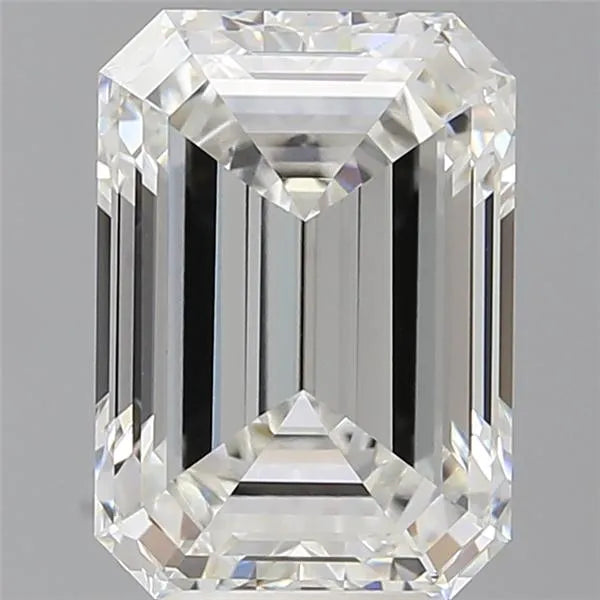
5.58ct Emerald Lab Grown Diamond (Colour F, Clarity VVS1, IGI Certified)
£895.00
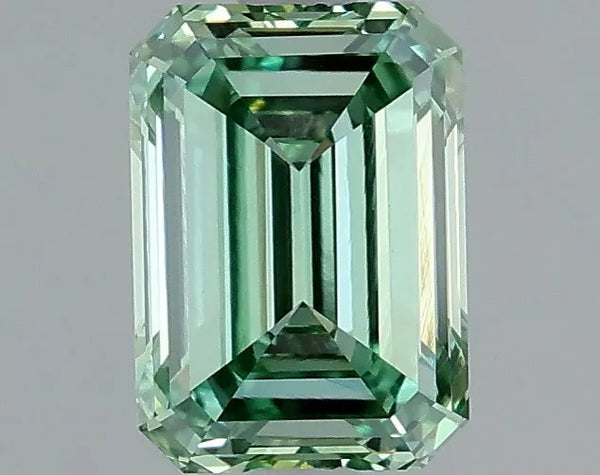
1.33ct Emerald Lab Grown Diamond (Colour Fancy Vivid Green, Clarity VVS2, IGI Certified)
£468.00
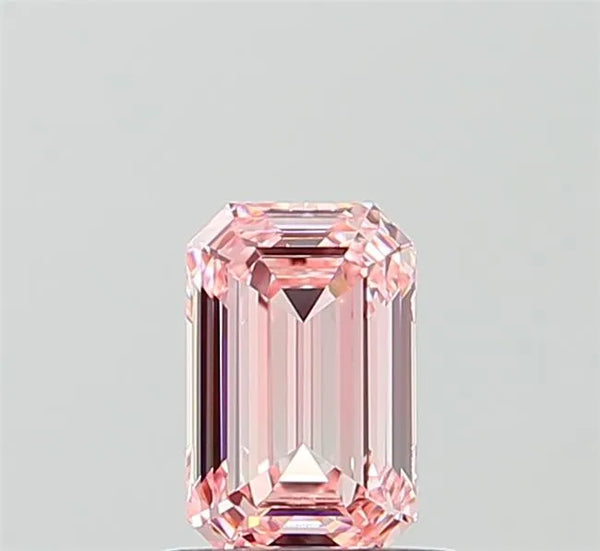
0.97ct Emerald Lab Grown Diamond (Colour Fancy Intense Pink, Clarity VVS1, IGI Certified)
£278.00

2.10ct Emerald Lab Grown Diamond (Colour F, Clarity IF, IGI Certified)
£1,264.00

0.74ct Emerald Lab Grown Diamond (Colour D, Clarity FL, IGI Certified)
£437.00

1.10ct Emerald Lab Grown Diamond (Colour Fancy Vivid Green, Clarity IF, IGI Certified)
£572.00
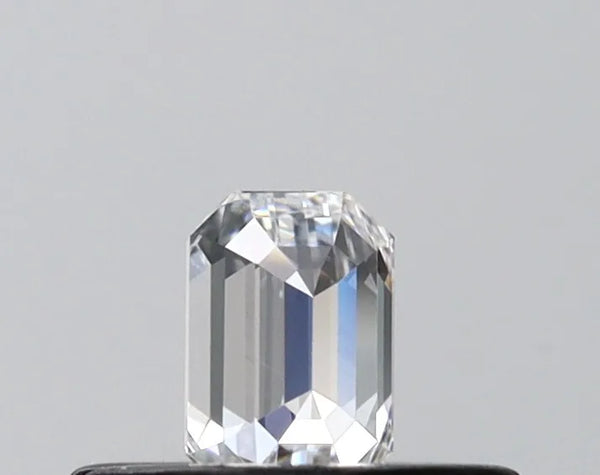
0.19ct Emerald Lab Grown Diamond (Colour D, Clarity VS1, IGI Certified)
£61.00
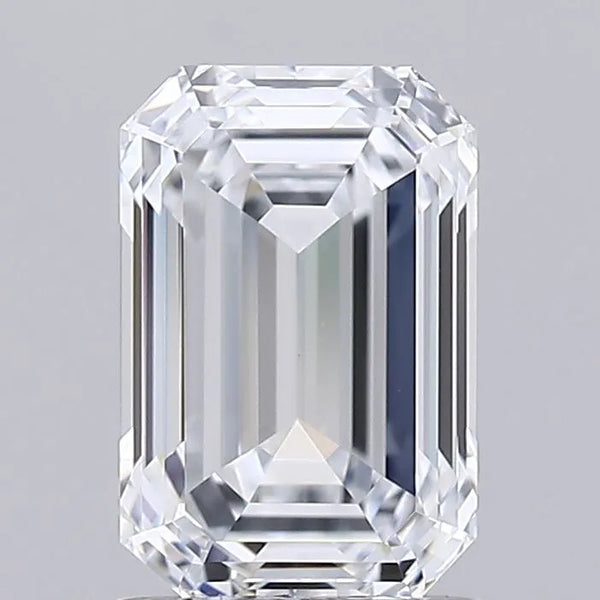
1.46ct Emerald Lab Grown Diamond (Colour D, Clarity VVS1, IGI Certified)
£242.00
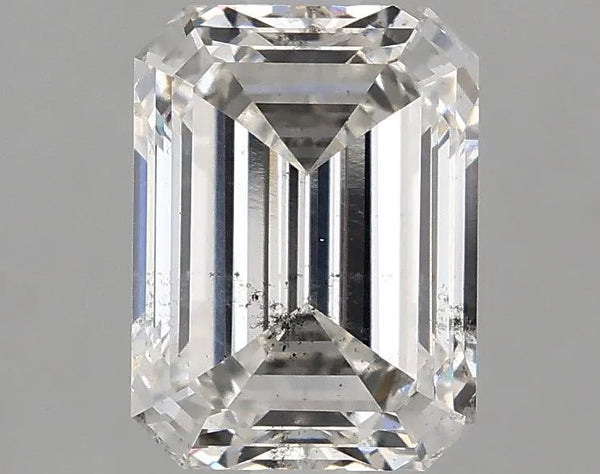
2.32ct Emerald Lab Grown Diamond (Colour G, Clarity SI2, IGI Certified)
£194.00
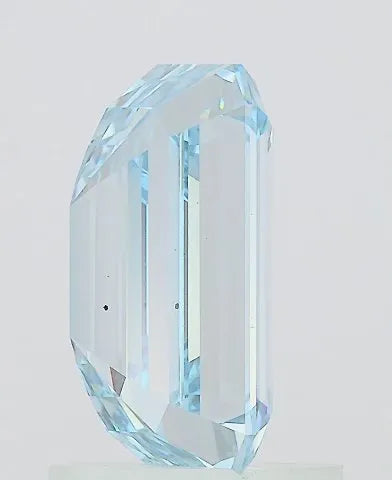
2.09ct Emerald Lab Grown Diamond (Colour Fancy Vivid Blue, Clarity SI1, IGI Certified)
£286.00
Loose & certified
Looking to pair it with a ring?
Every diamond on this page is loose — buy it on its own, set it into a ring of your own design, or pair it with one of our settings. Open any stone, click Set in a ring, and we’ll take you to your engagement, eternity or wedding band options.
Already have a setting in mind? Tap the menu icon and choose Engagement Rings › Ring Builder.