Emerald Cut Natural Diamonds
What defines an emerald cut diamond?
An emerald cut diamond is shaped by a series of parallel step facets arranged in concentric rectangular rows, producing long flashes of light rather than the scattered brilliance of a round or cushion cut. The corners are cropped at 45 degrees, creating an octagonal outline that reduces stress on the stone's edges. Originally developed for emerald gemstones — hence the name — the cut was adopted for diamonds during the Art Deco period and remains closely associated with that geometric aesthetic. The open table of a natural emerald cut diamond makes clarity and colour highly visible to the naked eye; both factors carry more weight here than in brilliant-cut shapes, where facet patterns can mask inclusions. A length-to-width ratio between 1.30 and 1.50 is considered classic for the shape, though ratios closer to 1.20 produce a squarer outline that some prefer.
What clarity and colour grades suit a natural emerald cut diamond?
Because the emerald cut's step facets act like mirrors rather than prisms, inclusions and colour tints are easier to detect than in brilliant cuts. For a natural emerald cut diamond, VS2 or VS1 clarity is a practical minimum if the stone is to appear eye-clean, though some SI1 stones with inclusions positioned toward the girdle or beneath a prong can also appear clean in person — each stone warrants individual review. On colour, the open table amplifies any warmth in the body: stones graded G or above typically face up white in white metal settings, while H or I can work well in yellow or rose gold, where the setting's warmth aligns with the diamond's body colour rather than contrasting with it. Every natural emerald cut diamond we supply is certified by GIA, HRD or IGI, with clarity, colour and cut characteristics independently documented.
How much does a natural emerald cut diamond cost in the UK?
Price is driven by carat weight, clarity, colour and the specific length-to-width ratio of the stone. Natural emerald cut diamonds at a given carat weight tend to show a larger face-up surface area than round brilliants of the same weight, because the shallow, elongated profile spreads mass across a wider footprint — which means a 1.0ct natural emerald cut can appear noticeably larger face-up than a 1.0ct round. That visual size advantage can shift buying decisions. For buyers setting a stone into an engagement ring, Bridebook's 2026 UK average engagement ring spend of £2,247 provides one market benchmark, though spend on the centre stone alone varies considerably by carat weight and grade. All natural emerald cut diamonds are available loose for collection or setting elsewhere, and also available set into one of our rings at our Hatton Garden workshop.
Natural versus lab-grown emerald cut diamonds — what is the difference?
Natural emerald cut diamonds are mined from geological deposits and carry a finite, irreplaceable provenance that some buyers consider significant for long-term ownership. Lab-grown emerald cut diamonds are chemically identical — the same carbon crystal structure — but are produced in controlled environments and typically carry a lower price per carat, which can mean a larger or higher-graded stone for a comparable budget. Both are certified by GIA, HRD or IGI to the same grading standards. The choice between natural and lab often depends on whether resale value over decades is a priority, or whether maximising the stone's size and specification within a set budget matters more. Neither option is objectively superior; both are genuine diamonds, and both are available here.
Buying a loose emerald cut natural diamond: process and delivery
Loose natural emerald cut diamonds are selected from certified inventory and dispatched with their grading report. There are no exclusions on returns — every loose stone comes with a 30-day return window, no questions asked. Delivery across the UK is complimentary and insured. If a purchased stone is to be set into one of our rings, the ring-making process then begins: a CAD design is produced, a silver or wax sample can be reviewed at our Hatton Garden workshop by appointment, and the finished ring — cast, set, polished and hallmarked at the London Assay Office — is delivered within 7 to 14 working days from order confirmation, depending on the complexity of the setting chosen.
Frequently asked questions
Are emerald cut natural diamonds harder to find than round diamonds?
Emerald cut natural diamonds represent a smaller proportion of the market than round brilliants, but they are not rare stones. A well-specified selection — in a range of carat weights, clarity grades and colour grades — is held in certified inventory and available to browse loose or set. GIA, HRD and IGI certification is provided with every stone.
What length-to-width ratio should I look for in an emerald cut?
A ratio between 1.30 and 1.50 is the traditional range for an emerald cut diamond, producing the elongated rectangular outline most associated with the shape. Ratios below 1.20 approach a square, which some buyers prefer. The ideal ratio is a matter of proportion preference and finger profile — longer ratios tend to elongate the appearance of the finger.
Does an emerald cut diamond show colour more than other shapes?
Yes. The step facets and large open table of an emerald cut reflect body colour more directly than a brilliant cut's facet pattern. Natural emerald cut diamonds graded G or above typically appear white in white metal settings. Warmer grades such as H or I can sit well in yellow or rose gold, where the metal's tone complements rather than highlights any warmth in the stone.
Can a natural emerald cut diamond be returned if it is not right?
Loose natural emerald cut diamonds carry a 30-day return period with no questions asked and no exclusions. If the stone has already been set into a ring, the ring's standard 30-day return policy applies — custom and bespoke orders are excluded from that policy. Complimentary insured UK delivery is included on all orders.
Which ring settings suit an emerald cut natural diamond?
Four-claw and bezel settings are the most common choices for natural emerald cut diamonds — four claws sit at the corners and leave the step facets unobstructed, while a bezel traces the entire outline and offers a more protected, architectural finish. Three-stone settings also suit the shape well, with the rectangular outline pairing proportionally with matching emerald cut or baguette side stones.
How much does a 1 carat emerald cut natural diamond cost in the UK?
A 1 carat emerald cut natural diamond in the UK typically ranges from around £3,000 to £8,000 depending on colour, clarity and cut. The step-cut facet pattern of an emerald shows inclusions and body colour more directly than a brilliant cut, so quality grades matter more visibly: a 1ct emerald at G colour, VS1 clarity with strong proportions commonly sits in the £4,500 to £6,500 band with GIA, IGI or HRD certification. D-F colour, VVS or Flawless clarity stones extend above £8,500. Higher-clarity stones command a meaningful premium because flaws are harder to hide in step cuts — for an emerald specifically, prioritise VS1 or better over carat weight.
What is the difference between a natural emerald cut diamond and a square emerald cut?
A standard emerald cut natural diamond has a rectangular outline with a length-to-width ratio between 1.30 and 1.50. A square emerald cut — sometimes called an Asscher when it has additional crown facets — has a ratio close to 1.00, producing a square shape with cropped corners and the same step facet pattern. Both share the elegant elongated facets and open table that define the emerald cut family. The choice between the two is largely outline preference; the certificate will record the exact length-to-width ratio.
Featured emerald cut natural diamonds
Hand-selected pieces from the President Jewellers catalogue
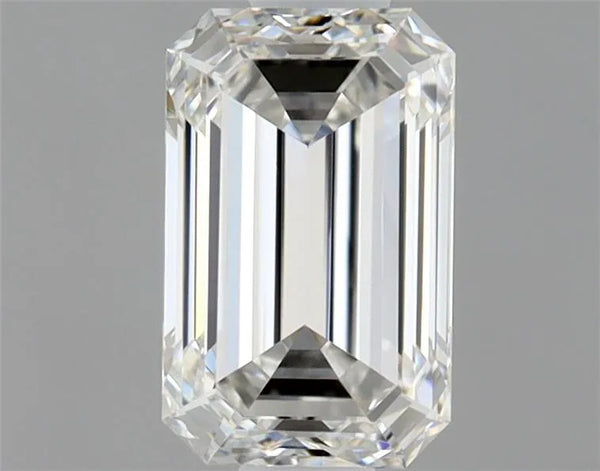
0.67ct Emerald Natural Diamond (Colour G, Clarity VVS1, Cut VG, GIA Certified)
£934.00
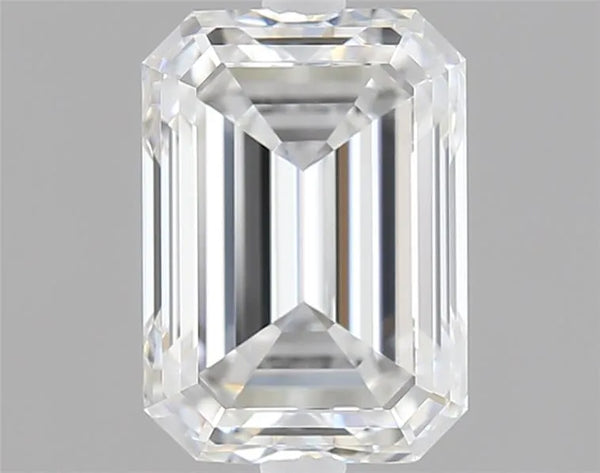
1.50ct Emerald Natural Diamond (Colour E, Clarity VVS1, GIA Certified)
£8,375.00
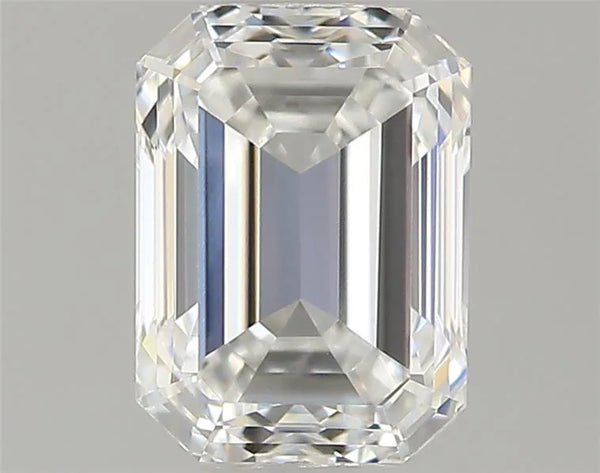
0.61ct Emerald Natural Diamond (Colour F, Clarity IF, Cut EX, GIA Certified)
£915.00
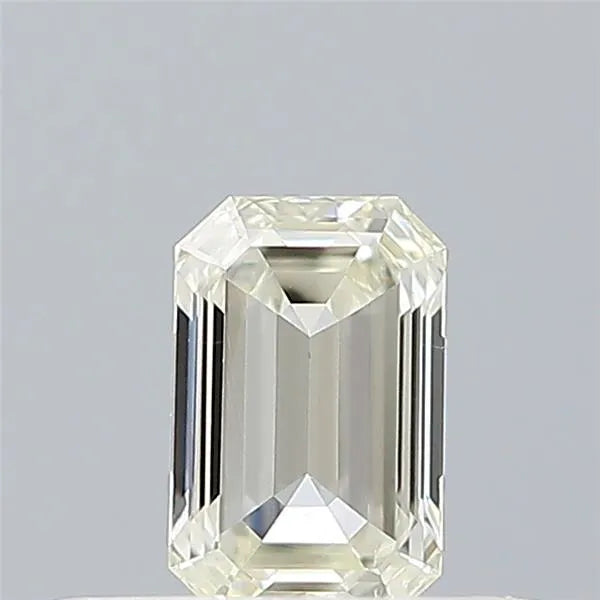
0.24ct Emerald Natural Diamond (Colour I, Clarity SI1, Cut VG, IGI Certified)
£199.00
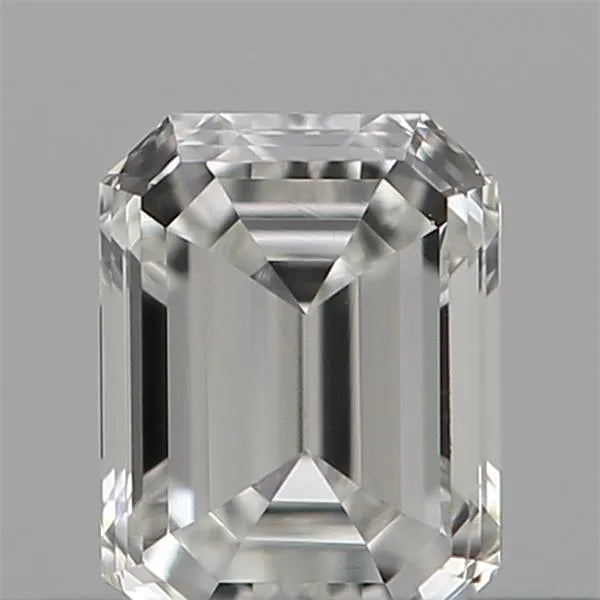
0.18ct Emerald Natural Diamond (Colour G, Clarity VVS2, Cut VG, IGI Certified)
£161.00
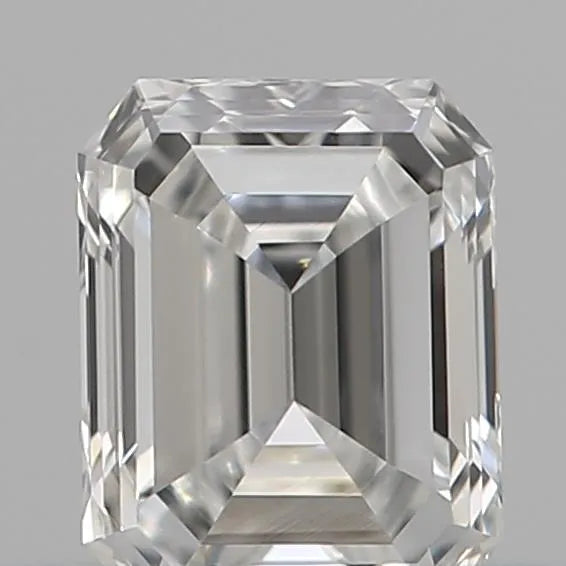
0.18ct Emerald Natural Diamond (Colour F, Clarity VVS2, Cut VG, IGI Certified)
£154.00
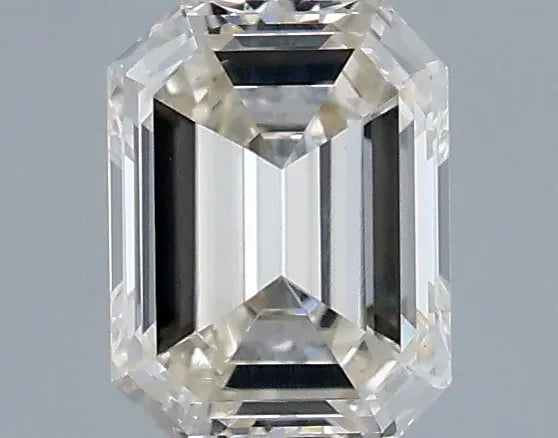
0.50ct Emerald Natural Diamond (Colour K, Clarity VS2, GIA Certified)
£323.00
0.51ct Emerald Natural Diamond (Colour K, Clarity SI1, GIA Certified)
£319.00
Loose & certified
Looking to pair it with a ring?
Every diamond on this page is loose — buy it on its own, set it into a ring of your own design, or pair it with one of our settings. Open any stone, click Set in a ring, and we’ll take you to your engagement, eternity or wedding band options.
Already have a setting in mind? Tap the menu icon and choose Engagement Rings › Ring Builder.